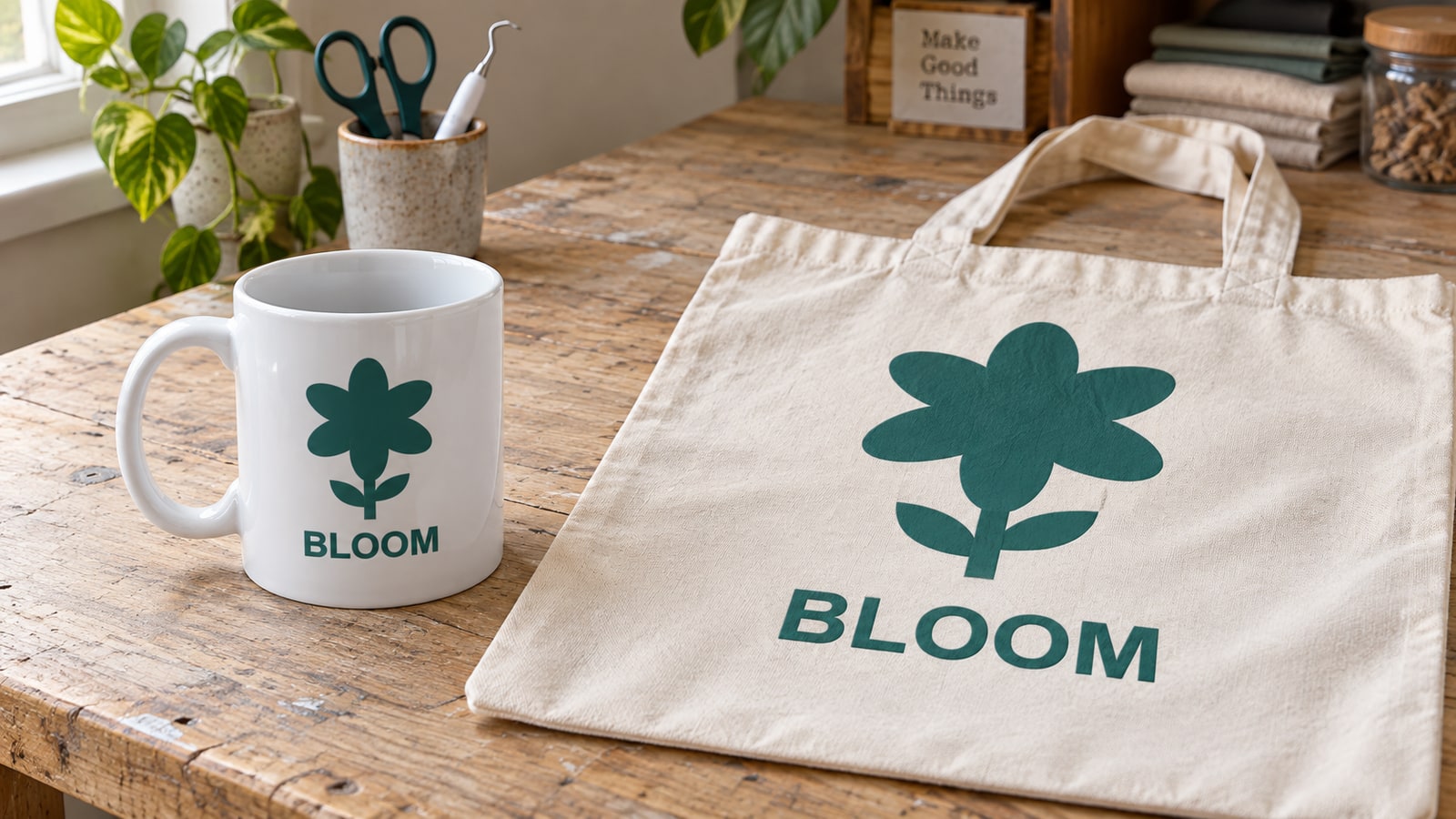
You bought vinyl, cut a design, ironed it onto a shirt, and it came off in the wash. Or you cut a design for a mug, and it will not stick properly.
Both are the same mistake: the two materials look almost identical on the roll and do completely different jobs.
Tip
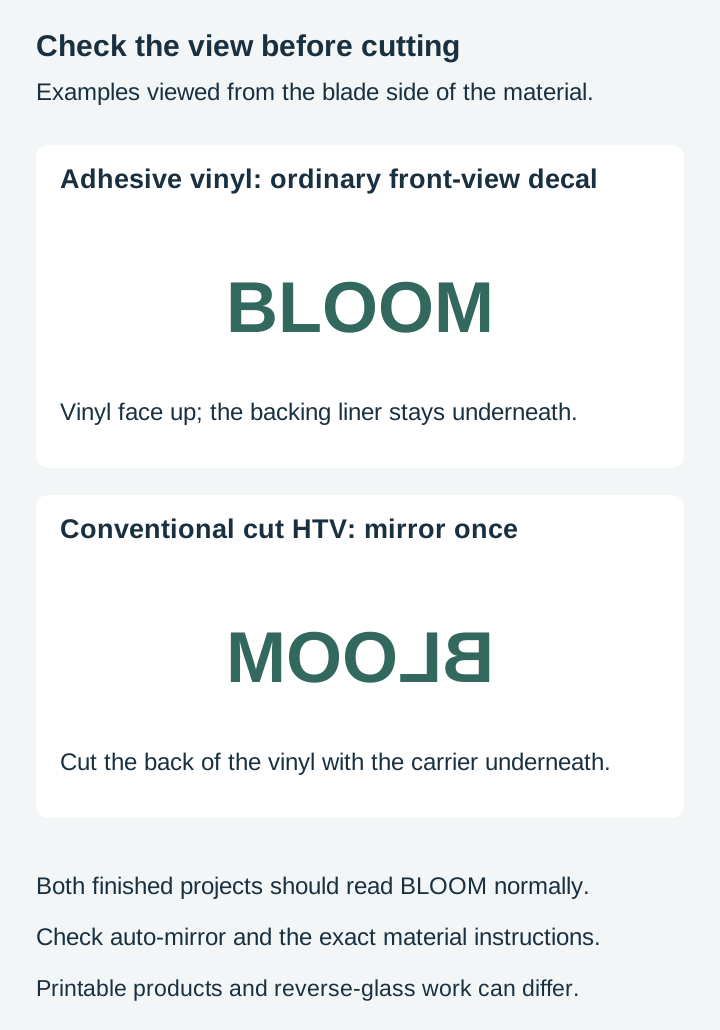
Short answer: adhesive vinyl is a sticker for hard surfaces. Heat transfer vinyl bonds into fabric with heat. Conventional cut HTV is mirrored with the carrier underneath; ordinary adhesive decals are cut face up without mirroring. Product-specific instructions take priority, especially for printable or reverse-glass work.
The actual difference
Adhesive vinyl has a sticky back, like a sticker. It comes on a paper backing, you weed it, you lift it with transfer tape, and you stick it to something hard. Mugs, tumblers, laptops, car windows, walls, signs, glass.
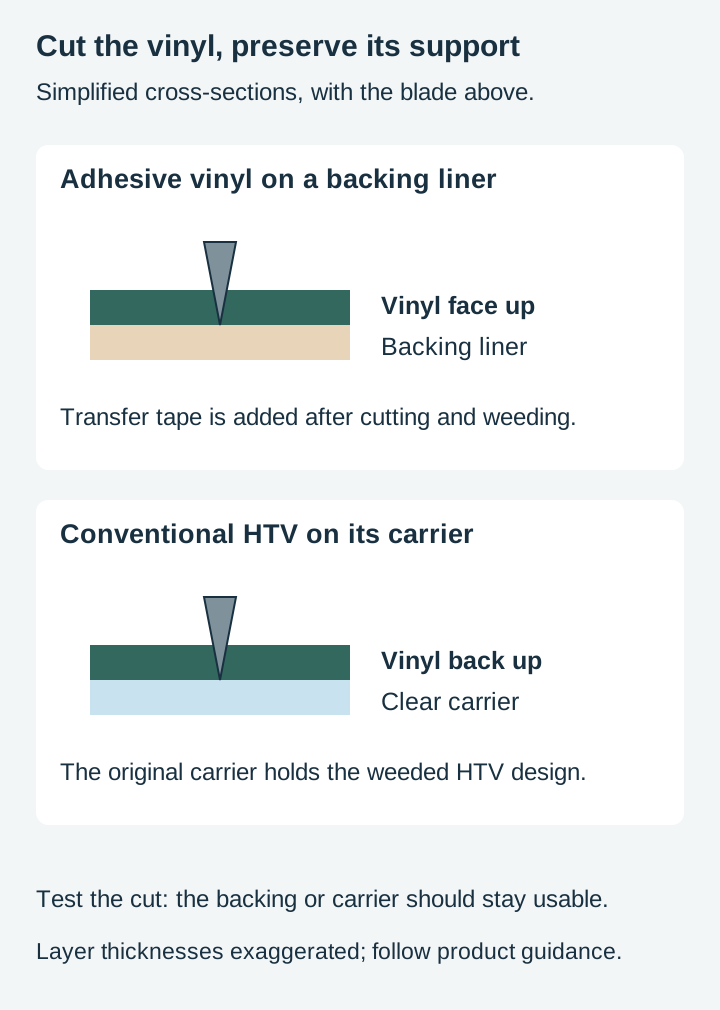
Heat transfer vinyl carries its bonding adhesive on the back, and that adhesive does nothing until it is heated. It comes attached to a clear carrier sheet, which has a light tack of its own to hold the weeded design in position, so the two stickinesses do different jobs: the carrier holds the pieces while you work, and heat and pressure bond the vinyl into the fibres of the fabric. Shirts, bags, aprons, tea towels, cushions.
That difference in how they attach drives everything else, including the one procedural difference that catches everybody.
The mirroring rule
The single most common beginner mistake in this whole area, and it is worth stating as a rule.
Mirror conventional cut HTV; leave ordinary adhesive decals unmirrored. Some printable or patterned heat-transfer products work differently. An adhesive design viewed through the back of glass may also need reversing. Check the product instructions and the intended viewing side.
The reason is which side you cut. HTV goes on the mat shiny carrier side down, so the blade cuts the coloured vinyl from the back while leaving the carrier underneath intact. Whatever you cut therefore comes out reversed once the sheet is flipped over onto the shirt, so the design has to be reversed in the software to compensate.
Standard adhesive vinyl is cut face up on its liner. Kiss-cut the vinyl while keeping the liner usable for weeding and transfer.
Lettering makes the direction easy to check before cutting. Design Space may enable mirroring automatically for the selected material; inspect the final mat preview instead of adding another flip by habit. Our mirror and flip post covers doing it properly.
Weeding and transferring
The two materials also behave differently once cut, in ways that matter for how you design.
Adhesive vinyl is weeded, then lifted with transfer tape, then applied. The transfer tape holds all the loose pieces in position while you move them, which helps move separate elements together when their size and adhesion are suitable.
HTV is weeded and then applied straight from its carrier sheet, which is already holding everything in place. That is convenient, and it means the carrier is doing the job transfer tape does for adhesive vinyl.
Both are far more forgiving of disconnected designs than cutting wood is, which our seamless pattern post touches on. Small floating pieces that would simply fall out of a wooden panel can be manageable here, because a liner or carrier supports them during transfer and the final surface supports them afterward.
Our weeding guide covers the technique for both.
 Baking Sayings & Kitchen Humor46 designs, commercial license included$3.99
Choosing between them
| Adhesive vinyl | Heat transfer vinyl | |
|---|---|---|
| Sticks to | Hard, smooth surfaces | Fabric |
| How it attaches | Adhesive backing | Heat-activated, bonds to fibres |
| Mirror the design | Normally no | Normally yes for conventional cut HTV |
| Cut face | Vinyl face up; liner underneath | Back of vinyl up; carrier underneath and intact |
| Needs a heat source | No | Yes, press or iron |
| Transfer step | Transfer tape | Comes on its own carrier |
| Typical projects | Mugs, tumblers, signs, windows, walls | Shirts, bags, aprons, tea towels |
The table decides most projects on its own. Where people hesitate is the awkward middle: a canvas bag with a rigid panel, a coated metal sign, a wooden sign somebody wants to look like fabric. In those cases the question is whether the surface is porous and heat-tolerant, and the material supplier's guidance for the specific product is the honest answer.
Adhesive vinyl comes in two kinds
Worth knowing before you buy a roll, because they are not interchangeable.
Removable is meant to come off cleanly. Wall decals, temporary decoration, seasonal window pieces, anything a customer might want to reposition or remove later.
Permanent is meant to stay. Mugs, tumblers, outdoor signage, car decals. It is the one to reach for on anything that will be handled or washed.
Durability and outdoor ratings vary by product and manufacturers publish figures for their own, which is where to look rather than at a general rule. Removable products are not flimsy, and some are rated for years outdoors under specified conditions. The difference is what they are designed to do at the end: removable is meant to come away cleanly, permanent is not, and using permanent on a wall shows up when somebody tries to take it off.
 Bathroom Humor Signs43 designs, commercial license included$3.99
What this changes in a design
Two things, both design-side.
Small islands behave differently. The dots on an i, the middles of letters, small floating detail. Transfer films support isolated pieces during application, but tiny features can still be difficult to weed or may lift on the finished object. Follow the material’s limits and test at the final size. Our detail post covers where that limit falls.
Layering is a different job on each. Multiple colours of adhesive vinyl are stacked on the surface and lined up by eye or with registration. Multiple colours of HTV are pressed in sequence, and each press affects the layer underneath, so the order matters and some products are not designed to be layered at all. Our layered designs guide covers the alignment side.
Where to start
Buy a small roll of each and put the same design on a mug and a shirt. The materials feel different, they weed differently, and the mirroring difference stops being an abstract rule the moment you have pressed one backwards.
Then keep the offcuts labelled, because once they are off the roll the two look remarkably similar.
Every design in our catalogue ships as SVG, PNG, JPG, PDF, and EPS, so the same file covers the mug decal and the shirt. The commercial license is included with every purchase with no cap on how many physical products you sell, and print-on-demand is allowed.
Browse the full catalogue at $3.99 a pack.
Designs for this project
Frequently Asked Questions
Which vinyl do I use for a t-shirt?
Heat transfer vinyl. Adhesive vinyl is a sticker: it sits on the surface and it will not survive a wash. HTV has a heat-activated adhesive that bonds into the fabric, which is why it stays put through the laundry.
Do I need to mirror my design?
For conventional cut HTV, mirror the design and cut the vinyl with its carrier underneath, leaving that carrier intact. Standard adhesive decals are normally cut face up without mirroring. Printable, patterned and reverse-glass applications can differ; follow the exact product instructions.
What is the difference between permanent and removable adhesive vinyl?
How aggressive the adhesive is and how long it is rated to last. Removable products are intended for suitable temporary applications, but clean removal depends on the surface, condition and time in place. Permanent is intended for mugs, cars and outdoor use. Manufacturers publish durability ratings for their own products, and those are the numbers to go by.
Can I put adhesive vinyl on a mug I will wash?
Permanent adhesive vinyl on a mug generally wants hand washing rather than a dishwasher, and the manufacturer's guidance for the specific product is the authority. For dishwasher use, choose a blank and decoration process explicitly rated for it; sublimation alone is not a universal guarantee.