Run the same file on two different boards and you can get two completely different results. On one the burn is a deep, even brown and every line is crisp. On the other the same design comes out blotchy, pale in places, scorched in others, and the fine details vanish into the grain.
The file did not change. The wood did. Species choice matters more than almost any setting on the machine, and it is the first thing to fix when engravings disappoint. Here is what actually works, what needs care, and what to leave at the lumberyard.
Tip
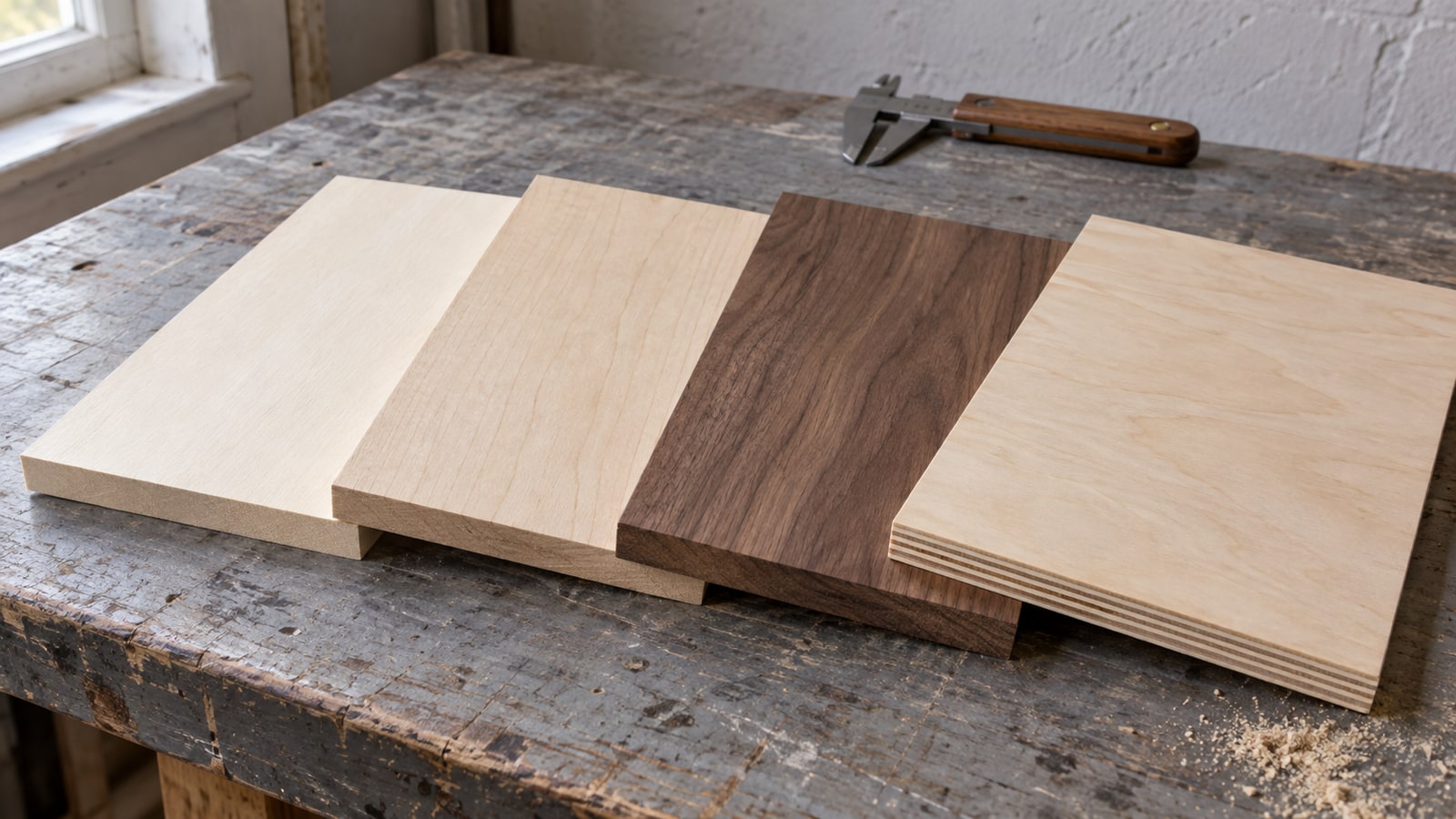
Short answer: Baltic birch plywood for signs and anything you make in volume, basswood for fine detail, maple or cherry when the piece needs to feel premium, walnut when rich grain matters more than maximum contrast. Avoid resinous pine and anything pressure treated.
What the laser actually does to wood
An engraving is a controlled burn. The laser chars the surface, and the contrast you see is the difference between that char and the untouched wood around it. That single fact explains almost every species recommendation in this guide.
Light woods give high contrast because the brown burn stands out against a pale background. Tight, even grain burns at a consistent rate, so the tone stays uniform across the whole design. Density decides how much power a cut needs, and resin content decides how much smoke and sticky residue you fight along the way.
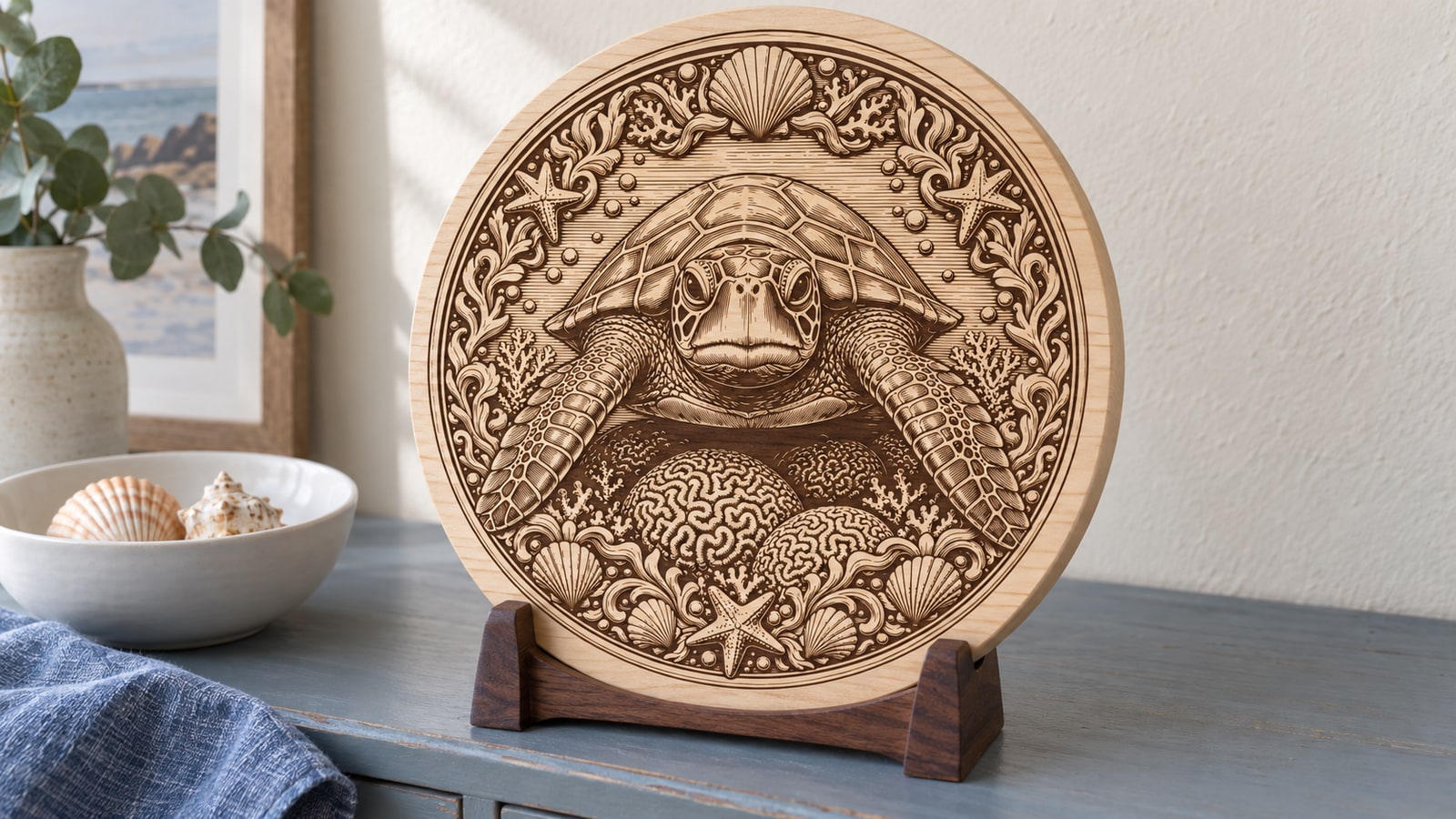
Detail lives or dies on grain too. We draw a lot of fine linework into our engraving files, and the difference between a clean result and a muddy one is usually whether the wood's grain texture is finer than the lines in the design. Open-grained oak swallows hatching that basswood renders perfectly.
The top woods for laser work
Basswood
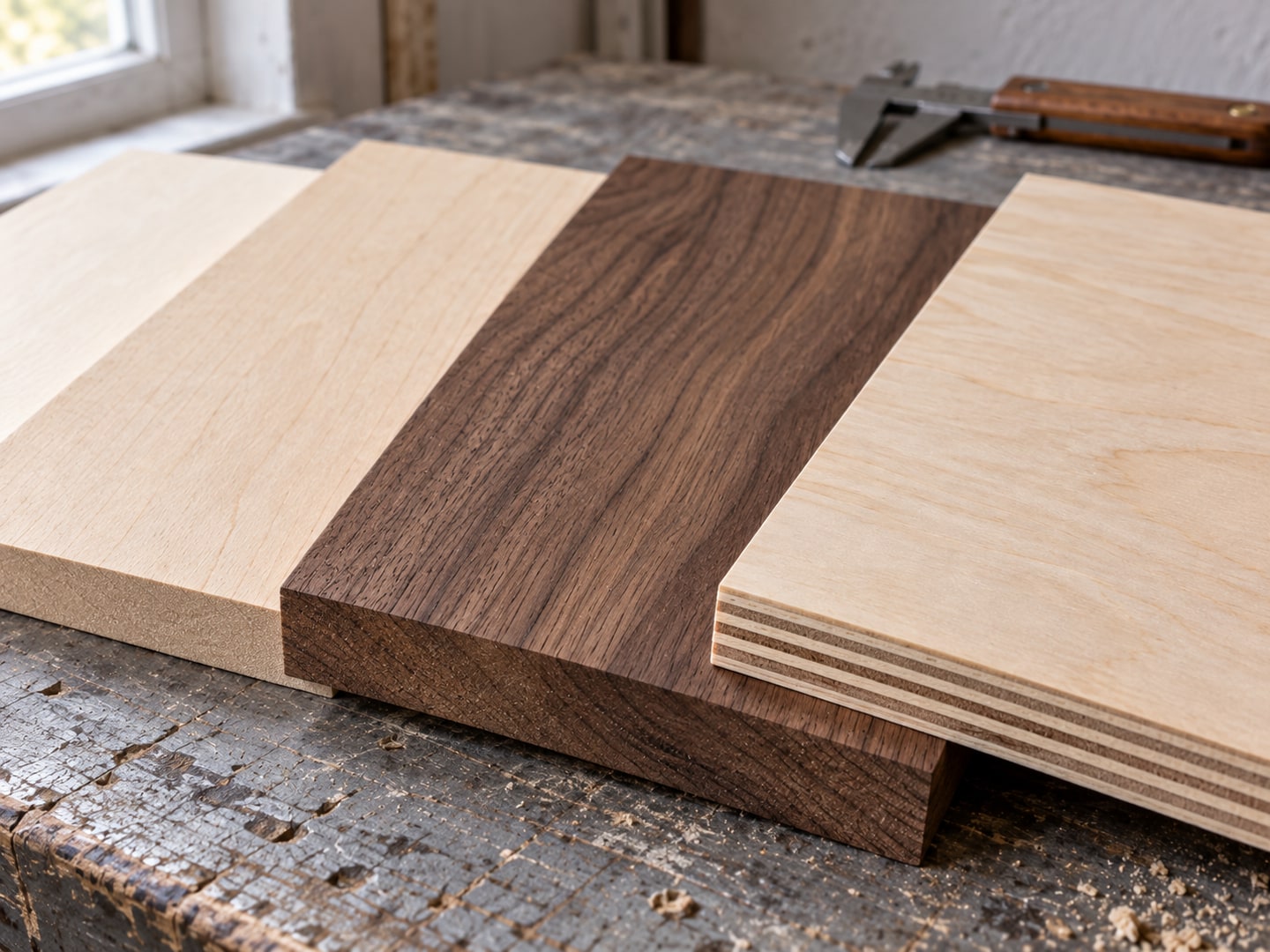
Basswood is the default answer for a reason. It is a pale, fine-grained hardwood with a soft surface that engraves with excellent contrast and very little smoke staining, and the grain is so tight and even that a design comes out consistent across the entire piece.
It is also soft enough to cut easily on lower-powered diode machines, which makes it a favorite for ornaments, keychains, and small signs. The trade-off is that same softness: finished pieces scratch and dent more easily than hardwoods, and large flat panels can be hard to source.
- Pros: excellent contrast, very fine grain, easy to cut, affordable, minimal warping
- Cons: soft surface scratches easily, limited availability in large panels
- Best for: ornaments, small signs, keychains, detailed engravings
Baltic birch plywood
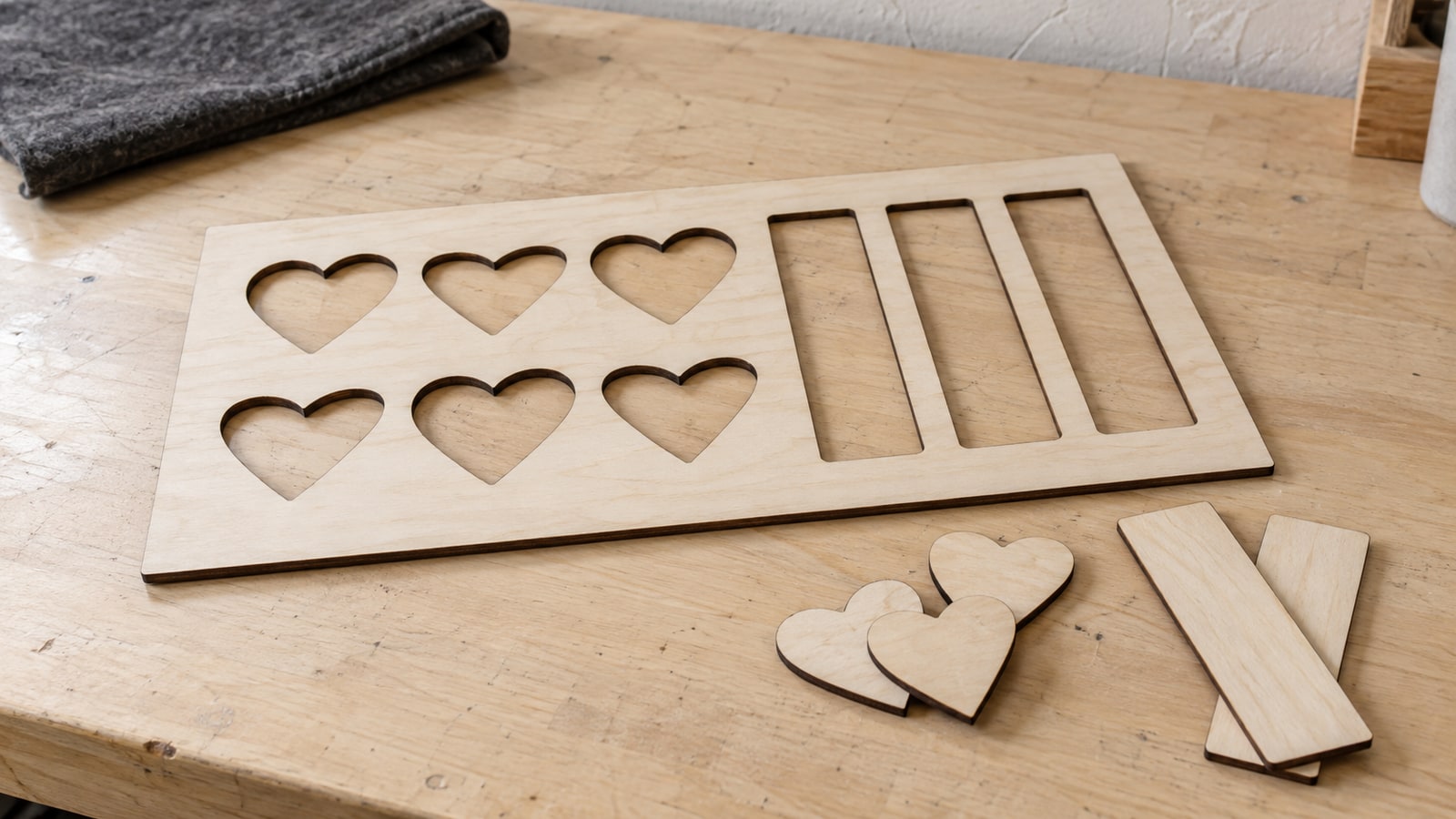
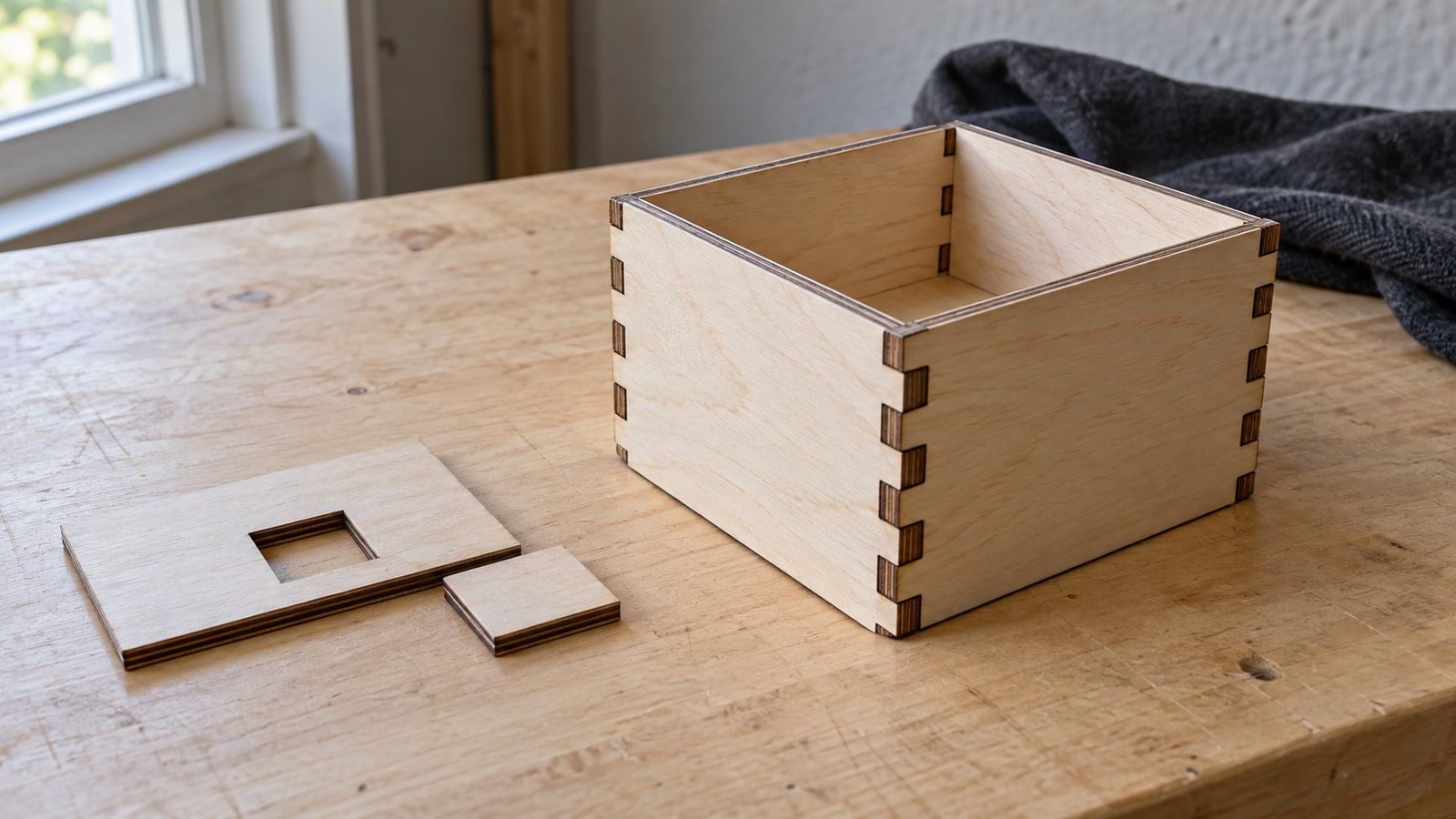
The workhorse of laser crafting. Baltic birch is built from many thin, void-free birch plies, typically sold in 1/8" to 1/2" sheets, and that construction is exactly why laser people love it. Good stock can be stable and consistent, but glue, core quality and flatness still vary between sheets.
The pale face veneer engraves with good contrast, and the striped edge left by a through-cut has become a look of its own. Watch the glue lines: they can show as slight color variation on cut edges, and lower grades hide patches in the face veneer that engrave differently than the surrounding wood. Buy B/BB grade or better for work you plan to sell.
- Pros: very consistent, affordable, large sheets, clean cut edges, stays flat
- Cons: glue layers show on cut edges, face patches on cheaper grades, not as refined as solid wood
- Best for: signs, ornaments, jewelry, anything produced in volume
Maple
Hard maple produces some of the finest engravings you can get on wood. The pale color and dense, tight grain hold extraordinary detail, and the burn comes out as a warm golden brown against the creamy background.
The density cuts both ways. Maple asks a lot more power to cut through than basswood, so lower-powered diode lasers should treat it as an engraving wood and buy it pre-cut. It is also the classic cutting board wood, which makes it the natural home for engraved kitchen pieces.
- Pros: extremely fine detail, beautiful color, hard and durable, food-safe favorite
- Cons: expensive, needs real power to cut through, thin stock harder to find
- Best for: cutting boards, detailed plaques, high-end gifts
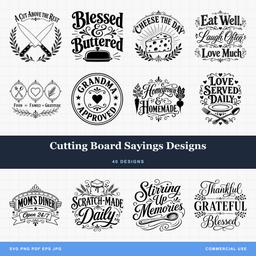 Cutting Board Sayings Designs40 designs, commercial license included$3.99
Cherry
Cherry brings a natural warmth nothing else quite matches. It darkens richly when engraved, and the wood itself deepens to a redder patina over months of light exposure, so a cherry piece genuinely improves with age.
The grain is fine and mostly consistent, though color can vary noticeably within a single board. On a piece with both pale sapwood and darker heartwood, run the design across the darker, more even section.
- Pros: beautiful warm tone, darkens with age, fine grain, elegant finish
- Cons: moderate cost, color varies within a board
- Best for: decorative plaques, awards, kitchen pieces, premium gifts
Walnut
Walnut starts with a dark background, so contrast can be subtle. Depending on the wood, finish, cleaning and process, a mark can appear lighter or darker; do not assume it will behave like a pale etch on slate. Test the actual blank before committing a detailed design.
The catch is that the contrast is subtler than burn-on-pale-wood, so delicate linework can get lost. Walnut rewards bold designs: strong silhouettes, chunky typography, deep engraves. Save the fine hatching for maple.
- Pros: rich dark color, distinctive grain, high-end appearance
- Cons: expensive, lower contrast mutes fine detail
- Best for: high-end signs, presentation pieces, corporate gifts
Alder
Alder gets called "poor man's cherry" and the nickname is fair. It offers a similar warm tone at a friendlier price, engraves with good contrast, and shows up everywhere as pre-cut plaques, coasters, and blanks, which is why so many engraving shops standardize on it.
It is softer than maple or cherry with a quieter grain pattern, which for engraving is mostly a feature: less grain fighting the design.
- Pros: affordable, warm tone, good contrast, widely sold as ready blanks
- Cons: softer than maple or cherry, less dramatic grain
- Best for: plaques, coasters, bulk production
Quick comparison
| Wood | Engrave quality | Cut quality | Cost | Availability |
|---|---|---|---|---|
| Basswood | Excellent | Excellent | $ | Good |
| Baltic birch | Very good | Excellent | $ | Excellent |
| Maple | Excellent | Good | $$$ | Good |
| Cherry | Very good | Good | $$ | Good |
| Walnut | Good (unique) | Good | $$$ | Good |
| Alder | Good | Very good | $ | Good |
| Pine | Variable | Good | $ | Excellent |
| Oak | Fair | Good | $$ | Excellent |
| MDF | Very consistent | Good | $ | Excellent |
Woods that work but need care
Pine
Pine is cheap and everywhere, which makes it tempting. The problem is the grain: alternating bands of soft earlywood and hard latewood burn at different rates, so the engraving comes out striped, dark where the wood is soft and pale across the growth rings. Resin pockets add random dark blotches and extra smoke on top.
Select boards with tight, even grain and you can get decent results, especially with bold designs where a little rustic variation adds character. Just do not expect a portrait-grade engraving from a construction-grade board.
Oak
Red and white oak carry dramatic open grain that either makes the piece or wrecks it. Fine detail sinks into the coarse texture, so a heavily hatched design turns to mush. Big, bold designs work differently: the grain becomes part of the character, and a chunky silhouette on oak has real farmhouse charm.
Cedar
Aromatic cedar smells wonderful and engraves with strong contrast, which is why cedar signs are everywhere at craft fairs. It is soft and resinous though, so expect more smoke, more surface stickiness, and grain variation similar to pine. Mask the surface and favor bold designs.
MDF
MDF has no grain at all, so it engraves with eerily consistent fine detail. It also looks like MDF. Use it to prototype a layout cheaply or as a paint-grade substrate, and be ready for the heavy smoke and fine dust it produces. As a finished natural-wood product, it convinces nobody.
Bamboo
Technically a grass, sold everywhere as cutting boards and coasters. Bamboo engraves reasonably well but the alternating strips in laminated boards vary in density, so long designs that cross many strips can shift in tone. Keep designs compact or embrace the striping.
Heads up
Never laser pressure-treated, painted, or reclaimed mystery wood. Pressure-treated lumber is infused with chemical preservatives you absolutely do not want vaporized into your workshop, old painted stock can carry lead, and glued-up reclaimed pieces hide unknown adhesives. Buy clean, untreated wood from a known source. This is settled safety guidance across every laser manufacturer's documentation.
Match the design to the wood
This is the part we know from the file side, because it decides how we draw. Every wood has a minimum detail size it can render, and the design has to respect it.
Tight-grained woods like basswood and maple hold hairline strokes, single-pixel-width hatching, and small text. That is where detailed engraving files earn their keep: fur texture, feather barbs, fine cross-hatch shading all survive.
Open-grained or variable woods need bolder files. On oak, pine, or cedar, choose designs built from strong silhouettes and thick strokes, because anything finer than the grain texture disappears. A clean silhouette also forgives the tonal variation those woods produce, since there is no subtle shading to go blotchy.
On dark wood such as walnut, favor clear shapes and test contrast at the intended size. A large filled region may read better than fine lines, but the result depends on the actual board and process. If you are unsure which way a pack leans, the design count pages show every file, and heavily hatched designs are easy to spot next to bold silhouette ones.
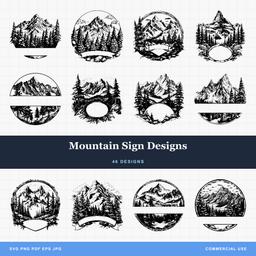 Mountain Sign Designs46 designs, commercial license included$3.99
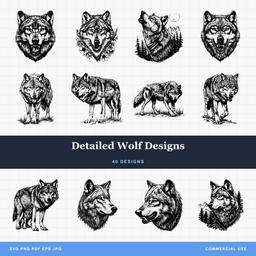 Detailed Wolf Designs40 designs, commercial license included$3.99
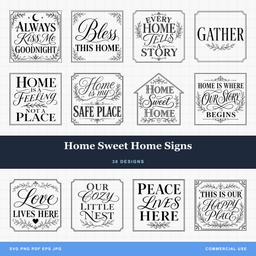 Home Sweet Home Signs30 designs, commercial license included$3.99
Habits that improve every wood
- Mask before engraving. Paper transfer tape or painter's tape over the surface catches smoke residue, and peels away after the job for a clean border. Skip it on deep engraves where the tape would just burn through.
- Sand first, lightly. A quick pass with fine grit gives the laser a uniform surface and noticeably sharper detail.
- Store boards flat and dry. Warped stock drifts in and out of focus across the bed, and focus drift shows up as tonal drift in the burn.
- Test every new batch. The same species varies between suppliers and even between boards. One small test engrave before a production run saves expensive surprises.
- Finish after engraving. Clear polyurethane, lacquer, or Danish oil protects the piece and deepens contrast. For cutting boards, stick to food-safe mineral oil or board butter.
A note on settings
You will notice this guide has no power and speed numbers. Settings depend on your specific machine and its wattage, and numbers copied from a stranger's chart are as likely to scorch your board as to help. Your machine maker's material library is the right starting point: Glowforge, xTool, and OMTech all publish per-material starting settings, and LightBurn's built-in material test generates a power-and-speed grid you can run on a scrap of each new wood in a few minutes. Dial in from there and write down what works.
For the software side of getting files onto the machine, our LightBurn SVG import tutorial and Glowforge SVG guide walk through both major ecosystems.
Pick the wood, then pick the design
Wood choice is the cheapest upgrade in laser work. The same file that struggles on a knotty pine board looks like gallery work on basswood or maple, and knowing which species suits which design is most of the battle.
Every pack in our catalog ships as SVG, PNG, JPG, PDF, and EPS with a commercial license included, so the pieces you engrave are yours to sell with no unit caps. Browse the nature and outdoors collection for sign designs that suit birch and alder, or the wildlife collection for detailed engraving work that belongs on maple. For material ideas beyond wood, see our best materials for laser engraving guide.
Designs for this project
Frequently Asked Questions
What is the best wood for laser engraving beginners?
Baltic birch plywood. Laser-suitable birch plywood is widely available and usually engraves with useful contrast, but veneer, glue and flatness vary. Test each new batch. Basswood is the step up when you want finer detail on a solid wood.
Why does my wood engraving look blotchy or uneven?
Usually the wood, not the machine. Species with alternating hard and soft grain, like pine, burn at different rates across the growth rings. Resin pockets and sap lines also darken faster than the surrounding wood. Switching to a tight, even-grained species such as basswood, maple, or alder fixes most blotchy results.
Can you laser cut any plywood?
No. Laser-friendly plywood like Baltic birch uses thin, void-free plies. Cheap construction plywood hides voids and thick glue lines that block the beam mid-cut, and exterior grades can use adhesives you do not want to vaporize. Confirm the exact plywood and adhesive are suitable for your laser with the supplier. A successful test cut does not establish chemical safety.
Do I need to seal wood after engraving?
For anything handled or used with food, yes. Clear polyurethane or lacquer protects signs and ornaments, and food-safe mineral oil or board butter suits cutting boards. A finish also deepens the engraved contrast slightly, which almost always flatters the design.