You are standing in front of the vinyl wall with a phone in one hand, and every roll looks like every other roll. Same width, similar price, glossy little labels that say permanent, removable, everyday, premium, easy weed. Nothing on the shelf tells you which one will still be on the tumbler after the dishwasher, or which one will peel off the nursery wall in two years without taking the paint with it.
The good news is that the wall is far simpler than it looks. There are two real families of vinyl and a handful of decisions inside them. Once you can name the families, that whole shelf collapses into three or four rolls you will actually keep buying.
Tip
The short version: if the design goes on a hard surface, buy adhesive vinyl. Permanent for tumblers, outdoor signs and car glass, removable for walls, windows and anything seasonal. If the design goes on fabric, buy heat transfer vinyl instead, because adhesive vinyl will not survive a wash. Everything after that is finish and personal taste.
The one question that decides the family
Does the design need to stick, or does it need to be pressed?
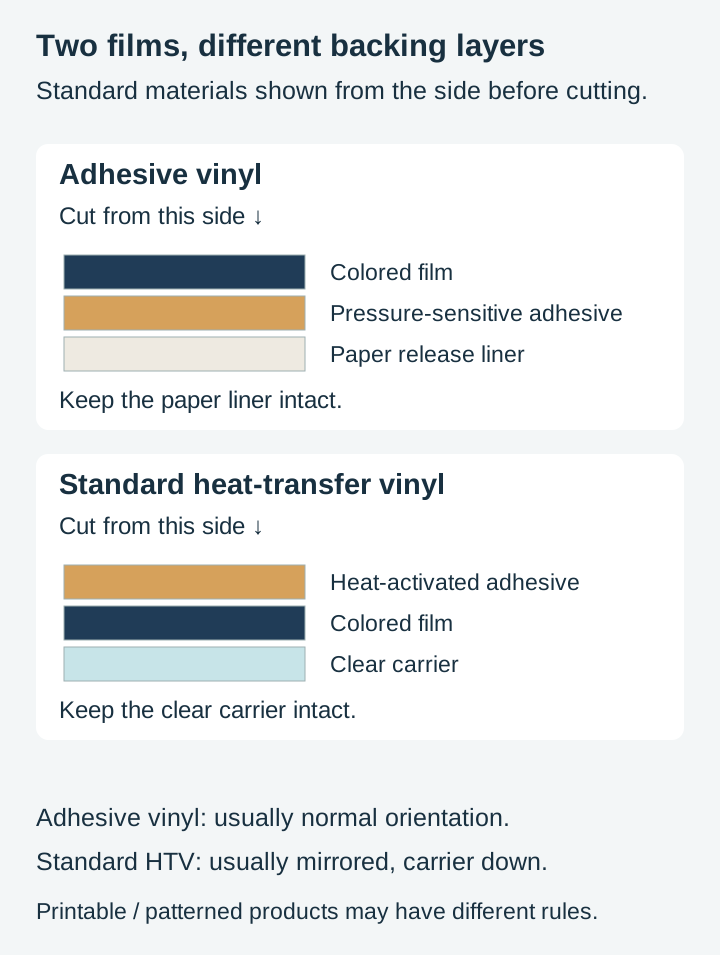
Adhesive vinyl has a sticky back protected by a paper liner. You cut it, weed away the parts you do not want, lift the rest with transfer tape and press it onto a hard surface. Mugs, tumblers, laptops, car windows, painted signs, glass jars, doormat stencils.
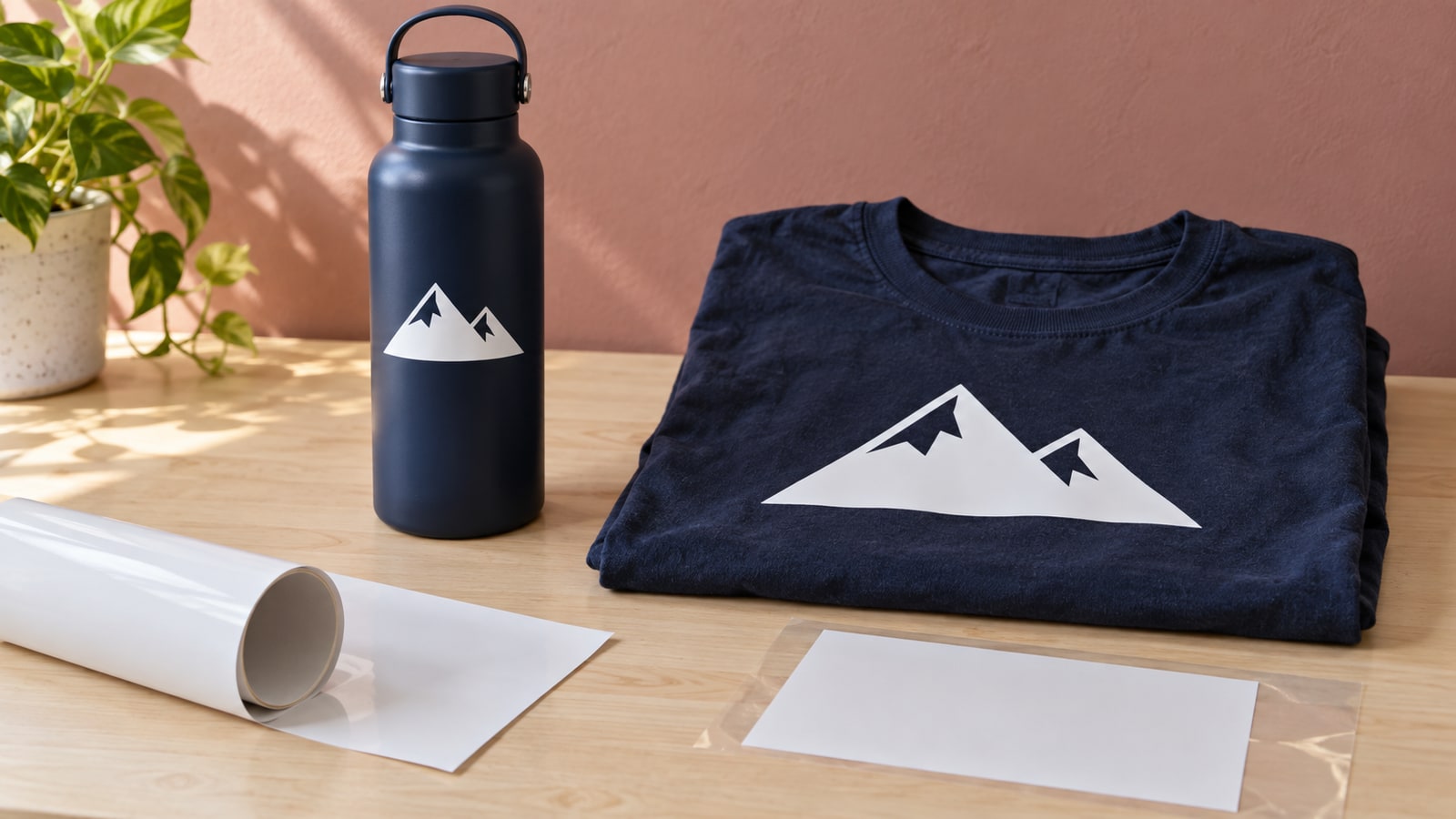
Heat transfer vinyl, called HTV or iron-on, has a heat-activated adhesive layer. It arrives stuck to a clear plastic carrier sheet, typically cuts carrier-side down and mirrored, and bonds to fabric under heat and pressure. Shirts, tote bags, hoodies, tea towels, gym towels.
They are not interchangeable. Adhesive vinyl on a t-shirt lasts until the first wash. Ordinary garment HTV is not a default mug material; use a documented compatible film and application process. Getting this fork right is most of the battle, and our first vinyl project walkthrough covers the full cut, weed and transfer sequence if you have not done one yet.
Adhesive vinyl: permanent versus removable
Inside the adhesive family, the split is the glue. The film on top is broadly similar. What changes is how hard the back grips and how it behaves when you eventually want it gone.
Manufacturers publish this, which is handy, because the craft-store packaging usually does not. The two reference films most craft vinyl gets compared against are ORACAL 651 and ORACAL 631, and ORAFOL puts the numbers in its own data sheets.
| Film | Adhesive | Published outdoor durability | Thickness | Finish |
|---|---|---|---|---|
| ORACAL 651 (permanent) | Solvent-based, permanent | Up to 6 years for standard colours, 4 for metallics, 3 for brilliant blue | 2.5 mil | Gloss |
| ORACAL 631 (removable) | Water-based, removable | Up to 3 years outdoors, indefinite indoors | 3 mil | Matte |
Those figures come from the ORACAL 651 technical data sheet and the ORACAL 631 product page. They are the manufacturer's published expectations for correctly applied vertical graphics, not a guarantee for a decal on a car boot lid in Arizona.
Branded craft vinyl is described the same way in weaker terms. Cricut's help centre lists its Premium Vinyl Permanent as water and UV resistant with an adhesive lasting up to three years, and its Premium Removable as staying removable for up to two years without residue. Those are useful shelf-side numbers as long as you read them as the manufacturer's claim rather than a warranty.
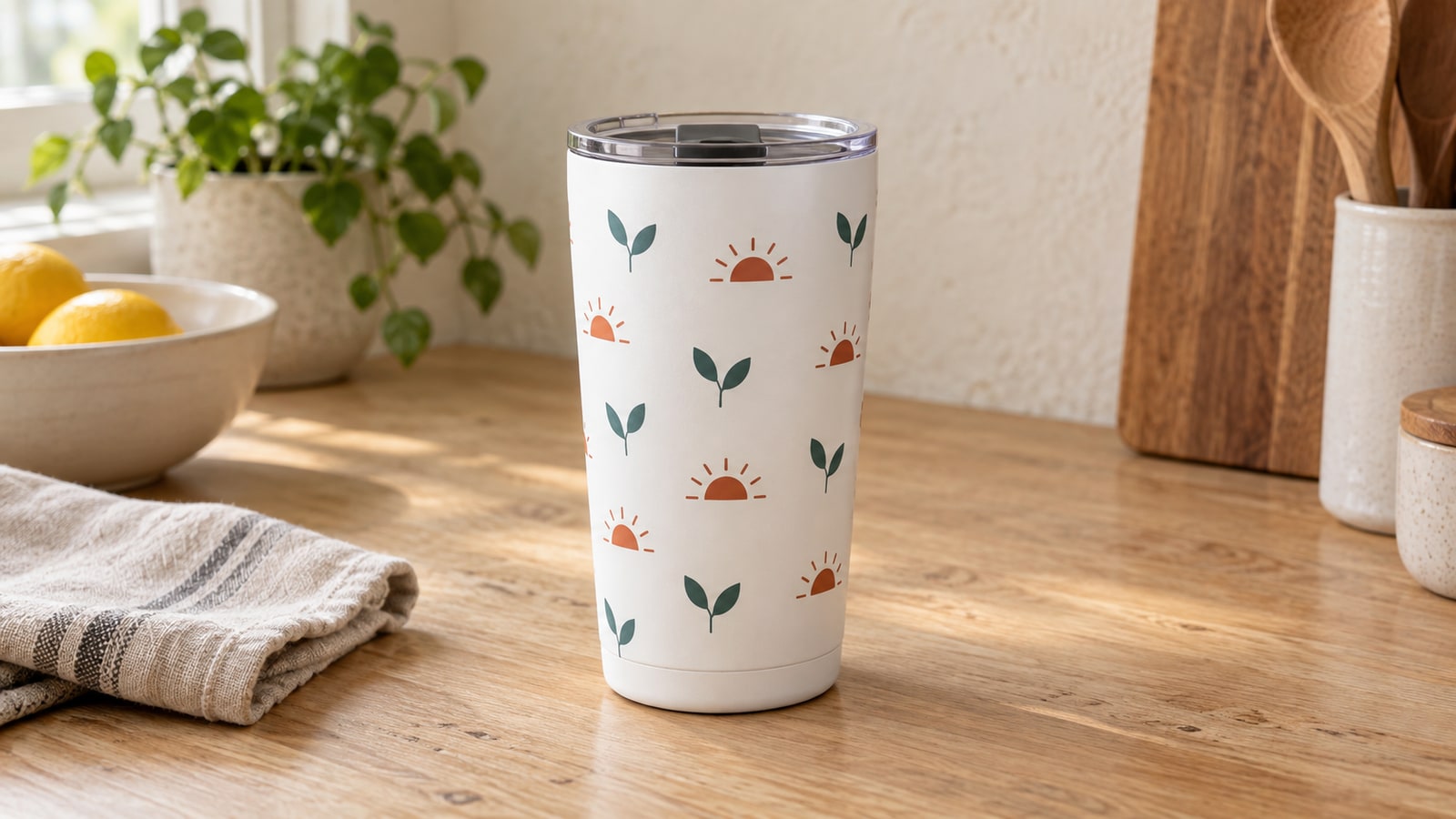
Permanent is the default for anything that gets touched. Tumblers, water bottles, mailboxes, car windows, outdoor signs, storage jars. The adhesive is designed for smooth sealed surfaces and it keeps gripping through moisture. ORAFOL still recommends hand washing for decorated cups and mugs, and that is sensible advice for any craft decal whatever the roll says.
Removable is the default for anything you will regret. Wall quotes, kids' bedroom decor, seasonal window graphics, shop signage for one season, a laptop lid you might sell. The water-based adhesive is specified to lift off sealed smooth surfaces without leaving residue.
The word permanent is the one that misleads people. It describes the strength of the bond, not the lifespan of the artwork. Permanent vinyl can still be scraped off glass with a blade and some patience. Removable vinyl on a badly sealed or freshly painted wall can still take paint with it, because the failure point is the paint, not the film. Fresh paint in particular wants a few weeks to cure before anything sticky goes near it.
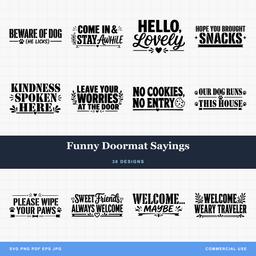 Funny Doormat Sayings30 designs, commercial license included$3.99
Doormats are the project that shows why the label matters less than the job. Coir doormats are painted, not decaled, so the vinyl is only a stencil. You cut the saying, weed it in reverse so the letters become holes, stick it down, dab paint through, and peel it off within the hour. The vinyl never has to survive anything. Cheap permanent vinyl works fine because it is gone before the paint dries, and its firmer grip actually gives crisper paint edges on that rough coir surface.
An adhesive stencil can carry separate letter counters on transfer tape, then hold them on the surface with adhesive. A reusable nonadhesive stencil usually needs bridges to retain those islands as one piece. Rough coir can make adhesion unreliable, so test the film and paint technique; neither bridges nor permanent adhesive guarantee a clean edge.
Cast and calendered, in one paragraph
You will see cast vinyl mentioned in the same breath as premium pricing. The difference is how the film is made. Calendered film is rolled out from heated PVC and carries internal stress, so over years it can shrink slightly and pull its edges back. Cast film is poured as a liquid and cured flat, which leaves it thinner and far more willing to conform to a shape without shrinking back. ORAFOL rates its cast ORACAL 951 at up to twelve years outdoors for black and white, against six for calendered 651.
For craft work, calendered is almost always the right buy. Cast earns its money on vehicle wraps and on compound curves, the sort of double-bend surface a flat film cannot lie on without wrinkling. A flat sign, a tumbler and a laptop lid do not need it.
Heat transfer vinyl and its variations
HTV is where the aisle gets genuinely crowded, because the finishes multiply. The underlying rule stays constant: the film is applied with heat, time and pressure, and each product has its own published trio of numbers.
Two published examples show the spread. Siser lists standard EasyWeed at 305°F / 150°C for 10 to 15 seconds with medium pressure, and its glitter film in the Siser application instructions at 320°F for 15 to 20 seconds. Cricut's own heat guide gives Everyday Iron-On on cotton as 315°F for 30 seconds with firm pressure and a warm peel. Different products, different numbers, and the sheet in the packet always beats a number remembered from a blog.
Here is what the common types are actually for.
Standard smooth HTV. The everyday roll, and the one to learn on. Siser publishes EasyWeed at 90 microns thick, which is why a pressed design feels like part of the shirt rather than a plastic patch. It layers, it weeds kindly, and it suits cotton and poly-cotton.
Stretch HTV. Thinner and more elastic, made for performance fabric, leggings and anything ribbed. Standard HTV on a stretchy garment cracks along the flex lines eventually. If the shirt pulls, buy the stretch version.
Glitter HTV. Thicker and stiffer, with real sparkle in the film rather than a printed imitation of it. It does not layer well underneath other films, it needs the higher press settings, and it punishes fine detail. Wonderful for a bold single-colour saying, painful for a delicate script.
Holographic and metallic HTV. Similar stiffness story to glitter, with a mirror or rainbow finish. Same advice: bold shapes, generous stroke widths.
Flock HTV. A raised velvet texture, like an old varsity jersey. Beautiful in person, thick enough that small details vanish into the pile.
Printable HTV. You print onto it with an inkjet, then cut and press. It can put full-color artwork on fabric without sublimation. Choose a product matched to the printer, garment color and fabric; cut orientation and masking instructions differ from standard HTV.
Patterned HTV. Pre-printed sheets in florals, plaids, camo. The pattern lives in the film, so a single-layer cut comes out multi-coloured, which is the closest thing to a cheat code the aisle offers.
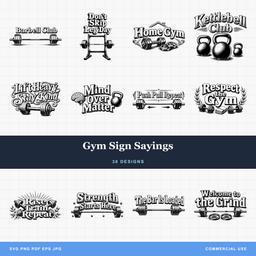 Gym Sign Sayings30 designs, commercial license included$3.99
Gym sayings are the honest test case for HTV, because the same file usually gets used twice. Pressed onto a shirt or a gym towel it needs bold weight and clean closed letterforms, and should be checked against the selected film’s detail and application requirements. Standard HTV is not always thicker than adhesive vinyl. Cut in removable vinyl and stuck on a home gym wall, the same design can carry finer lines because nothing has to weed at t-shirt scale or survive a wash. We draw these sayings with the heavier use in mind, which is why they hold up when the roll gets stiffer. The full heat transfer vinyl walkthrough covers mirroring, pressing and peel timing.
Specialty adhesive films worth knowing
The rest of the wall is mostly adhesive vinyl with something interesting done to the surface.
Glitter adhesive vinyl. Sparkle for hard surfaces. Thicker than plain film, so weeding fine detail is harder and it does not sit as flat on a curve.
Holographic and chrome. Eye-catching on tumblers and laptops, and often gloriously hard to photograph. Treat as bold-shapes-only.
Patterned and printed adhesive. Same idea as patterned HTV. One cut, many colours.
Chalkboard and dry-erase. Adhesive films with a writable surface. Pantry labels, kids' doors, fridge planners.
Etched glass film. A frosted-looking vinyl that mimics sandblasted glass without touching acid. Sold as a decorative alternative to real etching cream and much friendlier to a kitchen table.
Printable adhesive vinyl. Print Then Cut territory, and the fastest route to full-colour stickers. Match the printable film to the printer and ink it is specified for; hobby inkjet media and commercial printable films are different products. Some require a compatible laminate for the intended exposure. Cricut's own waterproof sticker set ships a vinyl laminate for exactly that reason. These need raster art with a cut outline rather than pure cut paths, so the file side works differently from every other roll here.
Matte versus gloss. Not a durability question, a look question. Matte photographs better and hides fingerprints on a black tumbler. Gloss reads brighter on a car window. Removable craft films tend to be matte and permanent ones tend to be gloss, but both finishes exist in both families.
Sheets, rolls, and the matless kind
Format matters more to your wallet than most people expect.
12 x 12 inch sheets are the beginner-friendly format and by far the most expensive per square inch. Fine for testing a colour, wasteful as a habit.
Rolls in 12 inch width, usually 5 to 30 feet, are the sane default once you know which colours you actually use. Black, white and one accent colour will cover an alarming proportion of everything you ever make.
Matless rolls, sold as Smart materials for the machines that accept them, feed without a cutting mat and allow long continuous cuts. Convenient, more expensive, and locked to particular machines. Check the roll works with your model before it goes in the basket, because matless feeding requires a compatible model. Cricut permits earlier Explore and Maker models to use Smart Materials on a suitable machine mat.
Bulk sign vinyl in 24 inch width is where the price per foot collapses, and it is worth considering once a design starts selling and you are cutting the same thing repeatedly.
What the design does to your vinyl choice
This part is our side of the table, because drawing cut files is what we do, and the artwork constrains the roll more than most guides admit.
Thickness fights detail. A thicker film has more material holding each cut edge together, so it resists the blade differently and it lifts small pieces more readily when you weed. That is why the same file that weeds beautifully in standard smooth vinyl can shed half its detail in glitter or flock.
Scaling makes this worse in a way that surprises people. Halve the size of a design and every stroke inside it halves too, so a 3 mm line becomes 1.5 mm. Whether that narrower feature survives depends on the film, cut and handling. Our guide to weeding vinyl without tearing it goes deeper into where those tears start.
These are design-side rules of thumb from building cut files rather than measurements taken from material, and your brand of vinyl will shift them. Test a scrap before committing a whole sheet.
| Vinyl type | Check at final size | Design consideration |
|---|---|---|
| Standard adhesive | Narrow strokes, islands and weeded gaps | Test the film on its intended surface |
| Standard smooth HTV | Fine cuts and carrier grip | Follow fabric and pressing instructions |
| Glitter or holographic adhesive | Small corners and lift during weeding | Bolder artwork can be easier to handle |
| Glitter or flock HTV | Small counters and texture | Check layering rules for the exact product |
| Printable vinyl | Pixel quality and the outer cut contour | Match printer, ink and any laminate |
The practical habit is to check the narrowest part of the design at the size you plan to cut, before you choose the roll. Thirty seconds of measuring saves a sheet of the expensive sparkly stuff.
Choosing a roll by project
| Project | Buy this | Why |
|---|---|---|
| Tumbler or water bottle | Permanent adhesive | Handled constantly, needs a moisture-resistant bond |
| Wall quote or nursery decor | Removable adhesive | Comes off sealed walls without residue |
| Car window decal | Permanent adhesive, gloss | Outdoor exposure and a smooth sealed surface |
| Painted wood sign | Adhesive vinyl as a stencil | The vinyl is removed before the sign is finished |
| Coir doormat | Cheap permanent adhesive as a stencil | Firm grip gives crisp paint edges, then it is peeled off |
| T-shirt or hoodie | Standard smooth HTV | Soft hand, layers, survives washing |
| Leggings or performance wear | Stretch HTV | Flexes with the fabric instead of cracking |
| Tote bag or tea towel | Standard smooth HTV | Cotton takes it well at documented settings |
| Full-colour sticker sheet | Printable adhesive, sealed | Inkjet art with a cut outline |
| Glass jar or pantry label | Permanent adhesive, or chalkboard film | Depends on whether the label ever changes |
| Seasonal window graphic | Removable adhesive | Designed to come off cleanly at the end of the season |
What to actually put in the basket first
If you are starting from nothing, four items cover almost everything.
- A roll of black permanent adhesive vinyl. The single most used material in the craft, and the one that makes tumblers, jars and car decals possible.
- A roll of white removable adhesive vinyl. For walls, windows and every project you are not certain about.
- A roll of white standard smooth HTV. Shirts and bags, at documented press settings.
- Transfer tape, medium tack. Adhesive vinyl needs it for anything beyond one simple shape. Standard HTV normally has its own carrier; printable and some patterned transfers may need a specified mask.
Add glitter, patterned or holographic later, once you know which projects you keep coming back to. Specialty films are more fun to buy than to weed, and a drawer of half-used novelty rolls is a rite of passage nobody actually enjoys.
Designs that suit the roll you bought
Every pack on PrintCutCarve is $3.99 and ships as SVG, PNG, JPG, PDF and EPS, with a commercial license included at no extra cost. There is no unit cap on the physical products you make and sell, and print-on-demand platforms are allowed too. The one thing you cannot do is resell or redistribute the digital file itself, and the license page has the full terms.
For stencil work on doormats and painted signs, and for gym and home decor sayings that hold up in thicker films, the two packs below are drawn with weight in the strokes and clean closed letterforms. The full quotes and text collection has plenty more in the same vein.
Designs for this project
Frequently Asked Questions
What is the difference between permanent and removable vinyl?
The intended bond and removal behavior are the main differences, but adhesive chemistry and film construction vary by product. ORACAL 651 is one example of a solvent-based permanent film. ORAFOL publishes up to six years of outdoor durability for ORACAL 651 in standard colours. Removable films such as ORACAL 631 use a water-based adhesive rated for up to three years outdoors and designed to come off sealed surfaces without residue. Both cut and weed in much the same way.
Which vinyl should I use on a tumbler?
Permanent adhesive vinyl. It is the type sold for items that get handled and washed, and glossy powder-coated tumblers are a smooth sealed surface, which is what these films are specified for. Hand washing is still the safer habit for any craft decal regardless of the roll, and ORAFOL explicitly recommends hand washing for cups and mugs decorated with its craft films.
Can I put heat transfer vinyl on a wooden sign?
Some manufacturers document HTV-on-wood projects, including Siser. Follow the specific film and surface instructions rather than inventing a low-heat setting. Adhesive vinyl on a compatible sealed surface, or a removable paint stencil, are other options.
Is glitter vinyl harder to cut than regular vinyl?
It is thicker and stiffer, so it needs more blade pressure and it is less forgiving of thin strokes and tiny counters. Siser publishes separate press settings for its glitter film, at a higher temperature and longer dwell than standard EasyWeed. Size the design up and pick bolder artwork when you reach for a glitter roll.
Do I need special vinyl for outdoor signs?
You need a permanent adhesive film rather than a removable one, and the published durability figure on the roll is your guide. Calendered craft films such as ORACAL 651 are rated in years rather than decades. Vehicle wraps and anything sitting on a compound curve are where cast films earn their higher price.