Football gets all the blog posts, including ours. It is the obvious one: huge audience, short intense season, everyone makes shirts for it. It is also the most crowded fifteen weeks of the year.
The better customer is quieter. She is the team parent who has volunteered to organize end-of-season gifts for twelve girls on a volleyball squad, she needs them by the banquet on the 14th, and she has never once compared prices. That order is worth more than a dozen one-off shirts, and it repeats every single season across every sport your town plays.
Tip
Short answer: chase team-quantity orders rather than individual fans. Use generic sport imagery with the athlete's own name and number, size the design to the actual garment rather than the design you last cut, and remember that baseball and softball run the longest season of any sport on the list.
The Sports That Carry the Rest of the Year
Football's calendar is the reason it feels dominant and also the reason it is a bad business to build on alone. It stops. Everything else fills the other seven months.
| Sport | US youth season | Gift moment |
|---|---|---|
| Basketball | November to March | Winter tournament, senior night |
| Wrestling | November to February | Districts, banquet |
| Hockey | October to March | Playoffs, coach gift |
| Cheer and gymnastics | Year round, comps Dec to May | Competition weekends |
| Soccer | Spring and fall both | Two banquets a year |
| Baseball and softball | March to July, travel into August | Longest run of the lot |
| Volleyball | August to November | Banquet season overlaps football |
Baseball and softball deserve the top spot in your planning. Between school ball, rec leagues, and travel teams, the season stretches from early spring into high summer, and travel families are the highest-spending group in youth sports. A 60-design baseball pack is not overkill for that market. It is one design per week of the season.
Soccer is the sleeper, because it runs twice. A spring banquet and a fall banquet from the same club, same parents, same order shape.
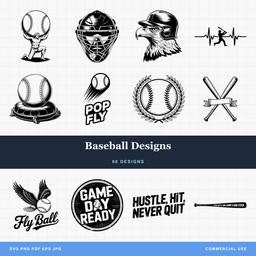 Baseball Designs60 designs, commercial license included$3.99
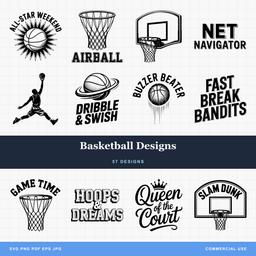 Basketball Designs57 designs, commercial license included$3.99
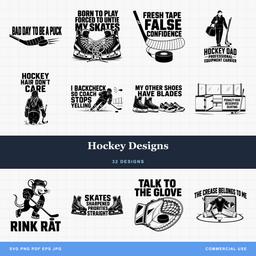 Hockey Designs32 designs, commercial license included$3.99
The Apparel Side, Where Most of the Money Is
Heat transfer vinyl on a shirt is still the backbone of team gifting, and sports designs test HTV harder than most subjects do.
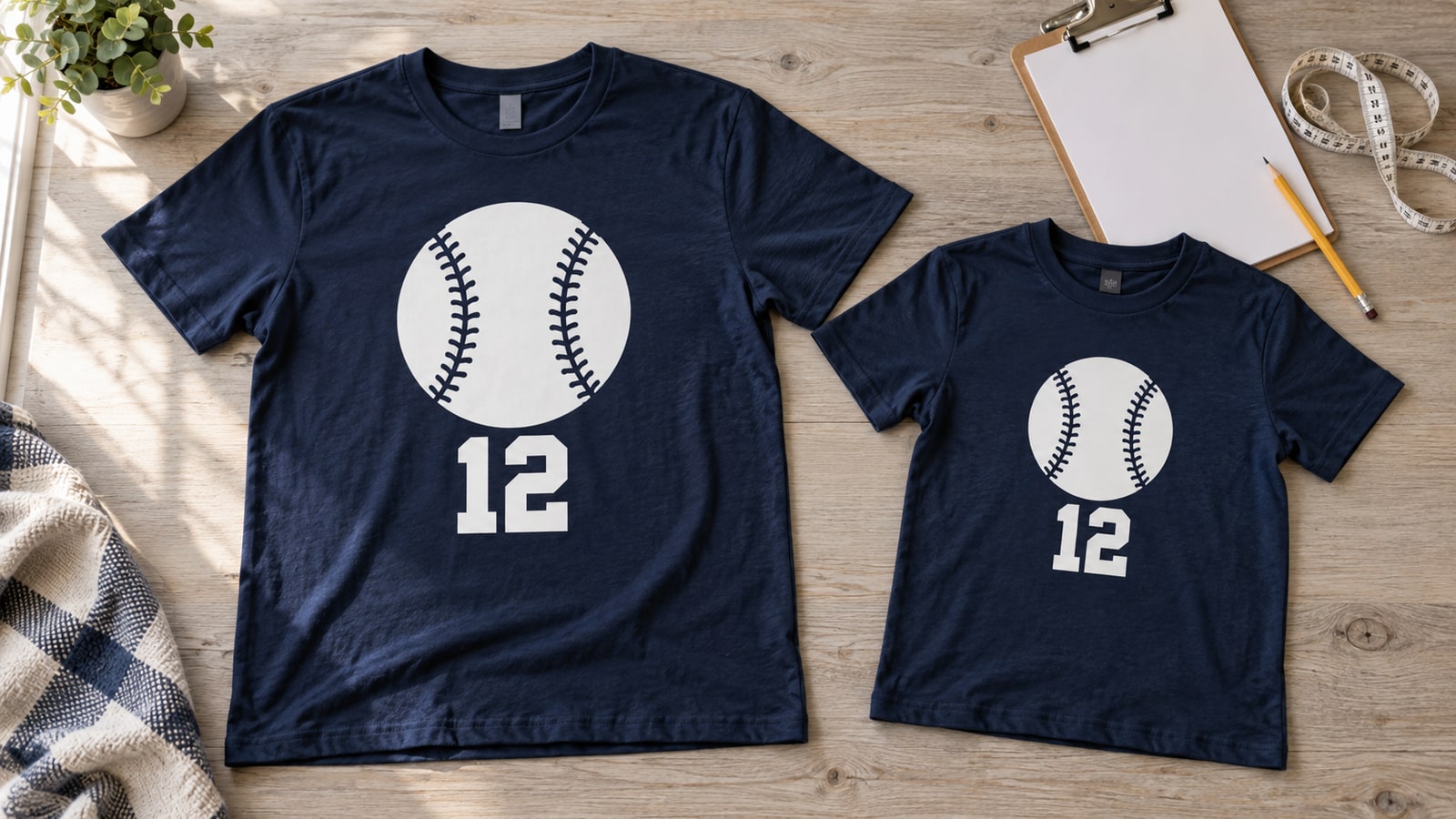
Think about what a sport icon actually contains. A baseball is a circle with two curved rows of stitching. In a filled-ball single-color design, those stitches may be negative space you have to weed out. In an outline design they may instead be positive pieces. Either version needs a test at the intended size; small stitches and gaps can turn a quick batch into careful detail work.
The same trap shows up in a basketball's seam lines, the mesh of a hockey net, and the panel stitching on a soccer ball. This is where the file itself matters more than the machine. A design drawn with cutting in mind keeps those interior details above a weedable width instead of tapering them to nothing at the ends.
Practical rules that save batches:
- Inspect the narrowest stitches and gaps at final size. Test them on the exact HTV instead of treating 2 mm as a universal limit.
- Cut a single test shirt before a bulk run, at the exact final size. A design that weeds beautifully at 11 inches can be unusable at 7.
- Layer instead of thinning. Two colors of HTV, base layer first, lets you use solid shapes rather than fragile negative space. Our layered design guide covers the stacking order.
- Confirm the required orientation. Standard cut HTV is usually mirrored; printable and specialty products may differ. Check the final mat preview and the material instructions.
For pressing, Siser's published EasyWeed instructions call for 305°F with medium pressure for 10 to 15 seconds, with a 2 to 3 second garment preheat first. Treat that as the starting point the manufacturer gives you and dial it in for your press and your blanks, since platen temperatures drift and fabric blends behave differently.
Size the Graphic to the Actual Shirt
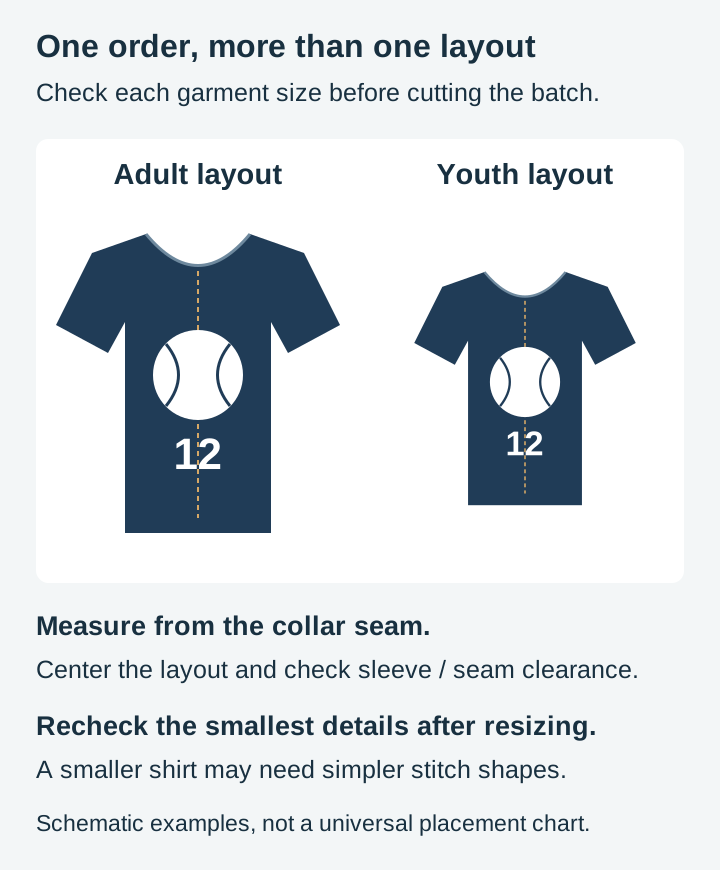
This is the part that catches people the first time they take a team order, because a team is a range of body sizes, not one size.
These rough full-chest planning ranges are not garment specifications. Check a paper layout on each actual size before cutting:
| Garment | Design width | Top of design below collar seam |
|---|---|---|
| Adult L and up | 11 to 12 in | 3 to 4 in |
| Adult S to M | 9 to 10 in | 3 in |
| Youth L | 8 to 9 in | 2.5 to 3.5 in |
| Youth S to M | 7 to 8 in | 2.5 in |
| Toddler | 5 to 6 in | 1 to 2 in |
Two things about that table are worth more than the numbers themselves.
Scaling down is not just shrinking. A design that shrinks proportionally takes its fine detail down with it, which is how a crisp adult graphic becomes an unweedable youth one. When you scale to a youth size, check the thinnest element and simplify if it fell below your weedable threshold. Our resizing guide covers doing this without distorting the artwork.
Placement is measured from the collar seam, not the shoulder. And a youth shirt's collar sits proportionally lower on the body, so a design placed by the adult measurement on a youth shirt ends up looking like it is sliding toward the hem.
For a mixed-size team order, cut in size groups rather than shirt by shirt. Cut all twelve youth graphics at youth scale, then all four coach and parent shirts at adult scale. Batching by size beats batching by name every time, and the batch production guide has more on organizing a run like that.
Beyond Shirts: What the Team Parent Also Needs
Apparel is the anchor, but the order usually has room for two or three more items and those carry better margins.
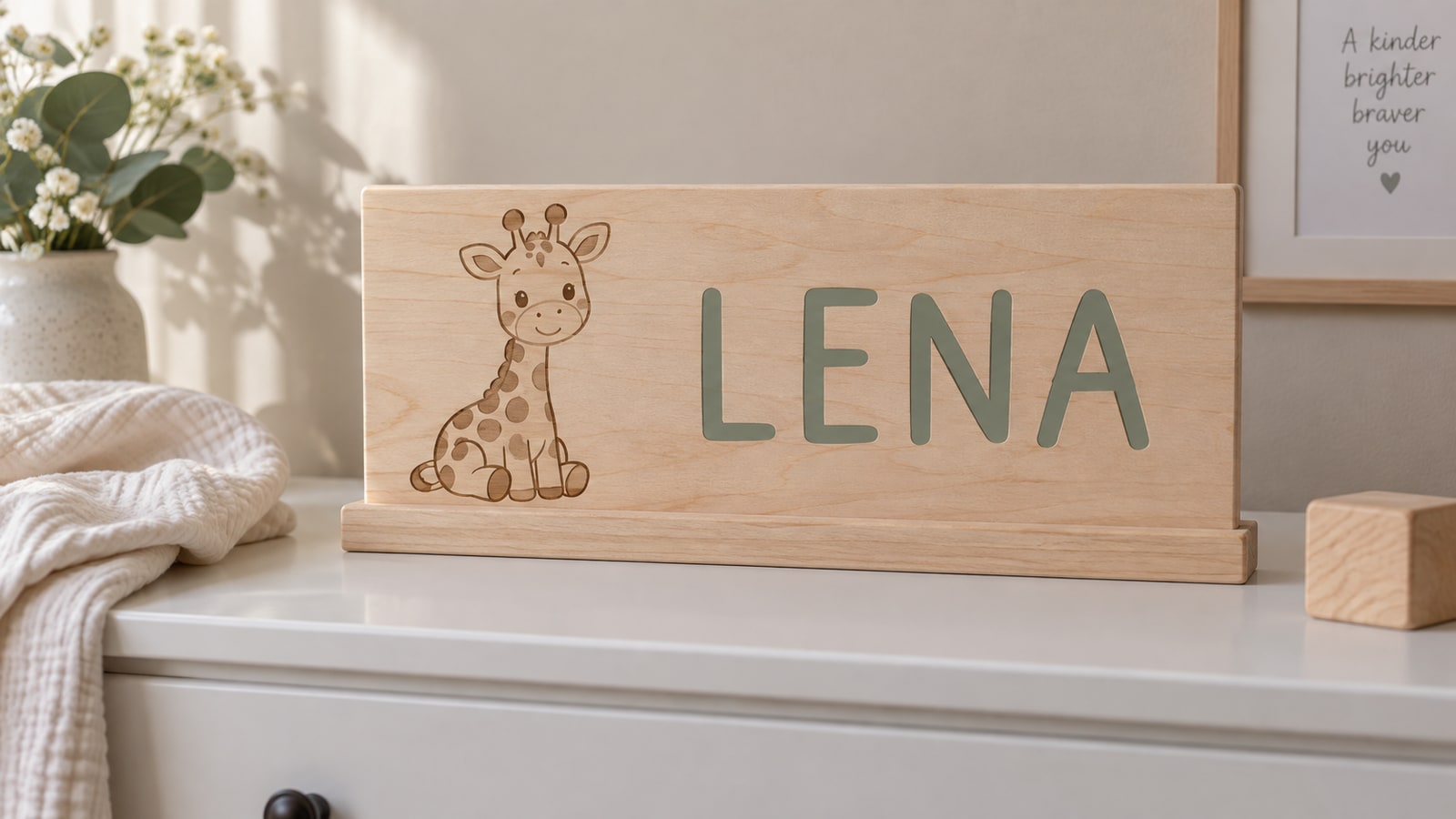
Bag tags are the quiet best seller. A 2 by 3.5 inch engraved wood or acrylic tag with the athlete's name, number, and a sport icon, on a swivel clip. They cost pennies, they take under two minutes each on a laser, and nobody orders one. They order twelve.
Coach gifts are where the price ceiling lifts. A parent group will happily spend on one nice piece for the coach when they are spending a few dollars a head on the kids. An engraved walnut plaque with the roster, a slate serving board, or a carved medallion all fit. Consider it a separate product tier rather than a scaled-up bag tag.
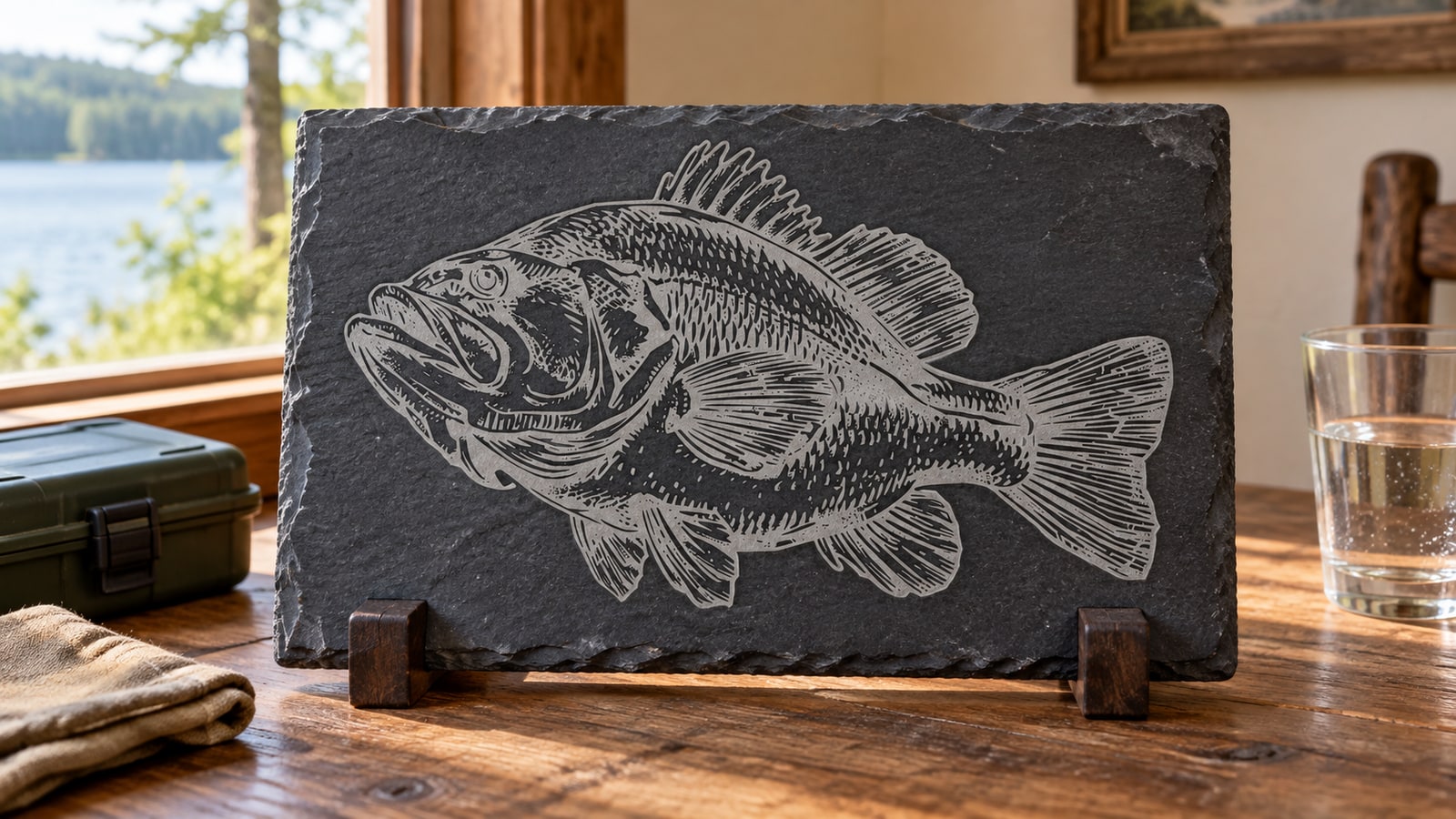
Slate coasters work for sports better than most subjects, because a laser etch on slate is a pale grey mark on dark stone and sport icons are bold enough shapes to read that way. Delicate designs disappear on slate. A basketball does not.
Senior night and banquet plaques are the annual set-piece. One design, twelve names, a deadline that has been on the calendar since August. This is the most predictable repeat order in the whole category.
Locker signs and door hangers in cut plywood, personalized with number and name, sell to individual families rather than the team, which makes them your upsell after the team order lands.
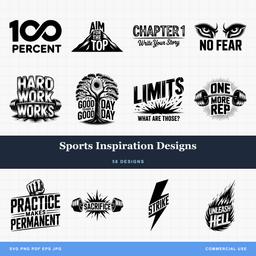 Sports Inspiration Designs58 designs, commercial license included$3.99
Sports That Get Underserved
Football, baseball, and basketball are well supplied. The gaps are where a small shop can own a niche in one town.
- Wrestling has fiercely loyal families and almost nothing made for it. Singlet silhouettes and headgear icons are instantly recognisable to that community and invisible to everyone else, which is the point.
- Gymnastics and cheer compete year round, which means gift moments that are not tied to a school calendar at all.
- Volleyball banquets land in November, right when everyone else is chasing football and Christmas. Less competition for your production time.
- Hockey parents spend more per family than any other youth sport, and the season runs straight through the winter craft fair calendar.
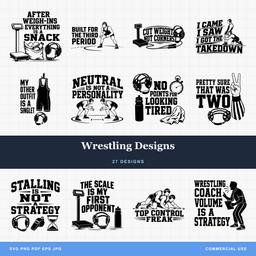 Wrestling Designs27 designs, commercial license included$3.99
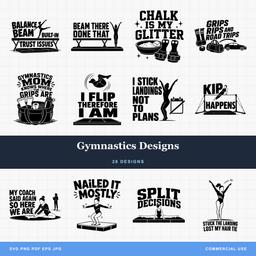 Gymnastics Designs28 designs, commercial license included$3.99
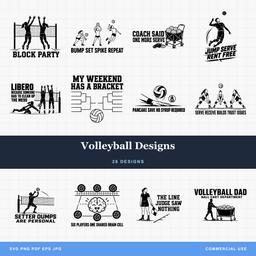 Volleyball Designs28 designs, commercial license included$3.99
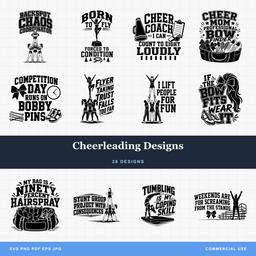 Cheerleading Designs28 designs, commercial license included$3.99
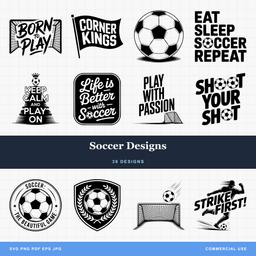 Soccer Designs39 designs, commercial license included$3.99
Check Rights to Team Branding
Team branding can be protected, and our commercial SVG license does not authorize a team’s name, logo or mascot. Obtain the necessary rights before offering branded merchandise. The USPTO explains infringement in terms of unauthorized uses likely to cause confusion about source or sponsorship.
You can also develop an original generic sports design with customer-approved names and numbers. Avoid presenting it as officially affiliated with a team; color choices alone do not resolve every rights question. A shirt that says a kid's name and number is more personal than a licensed logo ever was, and personalization is what carries the upcharge. Our personalization guide covers collecting that information without the back and forth.
Getting Set Up Before the Season
Every pack here is $3.99, the commercial license is included, and there is no cap on how many physical items you sell under it. Print-on-demand is allowed too, so the same volleyball graphic you press onto twelve shirts can also sit on a Printful listing year round without a second purchase.
If you are picking one sport to start with, start with whichever one your own town plays hardest, and have the files ready before the season does. Browse the full sports category for the other packs.
Designs for this project
Baseball Designs60 designs, commercial license included$3.99Basketball Designs57 designs, commercial license included$3.99Hockey Designs32 designs, commercial license included$3.99Soccer Designs39 designs, commercial license included$3.99Volleyball Designs28 designs, commercial license included$3.99Cheerleading Designs28 designs, commercial license included$3.99Wrestling Designs27 designs, commercial license included$3.99Gymnastics Designs28 designs, commercial license included$3.99Sports Inspiration Designs58 designs, commercial license included$3.99Frequently Asked Questions
How big should a design be on a youth shirt versus an adult shirt?
The sizing charts published by HTV suppliers cluster around 9 to 12 inches wide for a full chest design on adult sizes and 7 to 9 inches for youth, dropping to 5 or 6 inches for toddler. Placement scales too: about 3 to 4 inches below the collar seam on adult, 2.5 to 3.5 on youth, and as little as 1 to 2 inches on toddler. Measure the actual garment before a bulk press, because a youth large from one brand is a different shirt from another brand's.
Can I sell shirts with a real team's name or logo on them?
Team names, logos and mascots can be protected. Get the necessary authorization before selling merchandise that uses them or suggests an official affiliation. A commercial license for a generic sports SVG does not grant rights to team branding. Original generic imagery with customer-approved personalization is a separate option.