You found the design. It is exactly right, it is under five dollars, and your finger is on the buy button. Then a banner slides in offering unlimited access to the whole library for a yearly fee, and suddenly a simple purchase has turned into a decision about your next twelve months of crafting.
That banner is doing its job. The annoying part is that neither answer is wrong, and nobody selling you either option has much incentive to tell you when the other one is cheaper. So here is the arithmetic in the open, using our own real prices, including the cases where buying one pack at a time is the smarter move.
Tip
Short answer: every PrintCutCarve pack is $3.99 and the Platinum Club is $59.99 per year, so the break-even sits at sixteen packs. Fifteen or fewer packs a year, buy them individually. Sixteen or more, the membership costs less. Both carry the same commercial license.
The two models, minus the marketing
An individual purchase is a transaction that ends. You pay once, you download the files, and they are yours with no clock running. Nothing about your access depends on you continuing to be a customer.
A membership is access to a library for as long as you keep paying. You download what you want while you are a member, and the value depends entirely on how much you actually use it. A membership you forget about for four months is a donation.
Everything else in this comparison is detail hanging off those two sentences. The detail matters, though, because two memberships priced identically can be worth wildly different amounts depending on their licensing and their download caps.
What an individual pack actually gets you
At PrintCutCarve every product is $3.99, and that price does not change with the size of the pack. Our Halloween pack holds 120 designs. Our Christmas pack holds 100. A smaller themed set might hold 27. Same price.
That flat pricing is unusual enough to be worth stating plainly, because it changes how you should shop. The per-design cost of a large pack lands around three cents. Nobody needs 120 Halloween designs, but you only need three of them to be good for the pack to have paid for itself several times over.
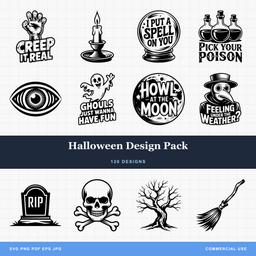 Halloween Design Pack120 designs, commercial license included$3.99
Every pack ships as SVG, PNG, JPG, PDF, and EPS, so you are not buying a format, you are buying a design and getting the format your machine wants. The commercial license comes with it automatically, covering unlimited physical products, print-on-demand included. There is no separate commercial tier to upgrade into later.
The honest limitation of buying singles is that your library only grows when you spend. If a customer asks for a llama in February and you have no llama, that is another purchase decision, another checkout, another small friction. Most people underestimate how often that happens once they start selling.
What a membership actually gets you
The Platinum Club is $59.99 per year, which works out to about $5 a month billed yearly. It opens the entire catalog: more than 350 packs and over 13,000 individual designs, with unlimited downloads and no daily cap. New designs are added regularly, and members get them without paying again.
Two clauses matter more than the price. The first is licensing: the same commercial license applies to everything a member downloads, identical to the license on an individual purchase. The second is what happens when you stop.
If you cancel, your access runs to the end of the billing period you already paid for, and then the library closes. The license on files you already downloaded stays valid. Products you are already making from those designs are unaffected, and you do not have to pull a listing because you stopped subscribing.
That second clause is the single biggest variable across the industry, and it is where a cheap membership can turn expensive. Some libraries treat downloads as rented for the term. If you build a bestselling product on a design and then lose the right to keep making it, the money you saved was never real.
The break-even math, spelled out
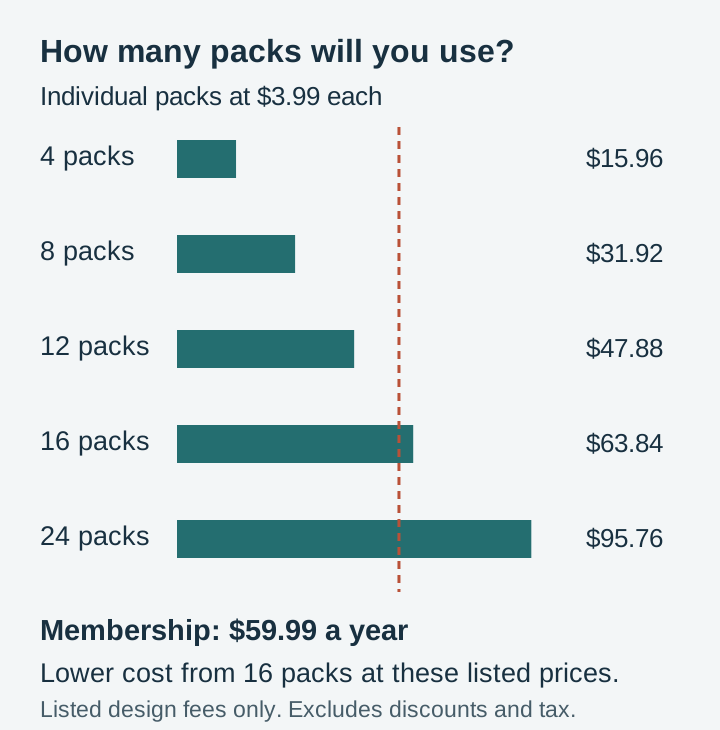
Divide the membership price by the pack price and you get the crossover. Sixteen packs. That is the whole calculation, and here it is against real numbers.
| Packs you buy in a year | Cost buying singles | Platinum Club | Cheaper choice |
|---|---|---|---|
| 4 | $15.96 | $59.99 | Singles |
| 8 | $31.92 | $59.99 | Singles |
| 12 | $47.88 | $59.99 | Singles |
| 15 | $59.85 | $59.99 | Line ball |
| 16 | $63.84 | $59.99 | Membership |
| 24 | $95.76 | $59.99 | Membership |
| 52 | $207.48 | $59.99 | Membership |
Fifteen packs a year costs fourteen cents less than the membership. At sixteen the membership pulls ahead and never looks back, because its cost stops moving while the other column keeps climbing.
One pack a month plus a few extras for the holidays puts you right on the line. That is worth sitting with for a moment, because it is a lower bar than most people assume. If you have ever bought two packs in one evening while planning a seasonal batch, you are closer to the crossover than you think.
Where the simple math misleads
The table assumes you buy at a steady rate. Almost nobody does. Craft buying is spiky, and the spikes are what make membership arithmetic slippery in both directions.
Seasonal makers buy nothing for four months and then eight packs in a fortnight while planning a Christmas run. Across a year they may clear sixteen easily, or stall at eleven, and which one happens is decided by a couple of impulsive evenings in October.
The second distortion runs the other way, and it favours buying singles. Every purchase decision is a small filter. When a pack costs $3.99 you stop and ask whether you will really use it, and that question kills a lot of bad purchases. Remove the question and downloads stop meaning anything, which is how people end up with a folder of 400 designs and no finished projects.
Then there is the effect that only shows up if you sell. Variety is not a luxury for a seller, it is inventory. A shop with six designs looks like a hobby; a shop with sixty looks like a business, and the difference in a browsing customer's mind is real. When a fresh theme costs nothing extra, you test ideas you would never have gambled four dollars on, and some of those tests turn into your best sellers.
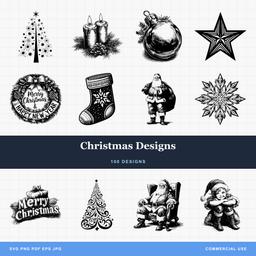 Christmas Designs100 designs, commercial license included$3.99
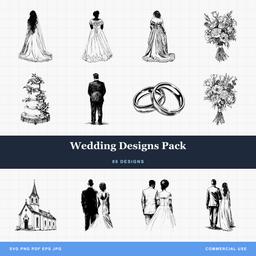 Wedding Designs Pack89 designs, commercial license included$3.99
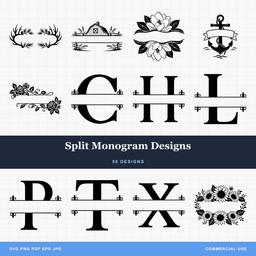 Split Monogram Designs50 designs, commercial license included$3.99
Buy individual packs if this sounds like you
You craft in bursts around gifts and holidays, a few projects a month at most. You know what you want before you go looking, and you are not browsing for inspiration.
You dislike recurring charges on principle, or you have been burned by one you forgot to cancel. That is a legitimate reason on its own, and no amount of per-design math beats the peace of mind of a purchase that is simply finished.
You need one theme deeply rather than many themes broadly. Somebody making nothing but deer plaques does not need 13,000 designs; they need a good deer pack and a decent afternoon.
You are new enough that you do not yet know what you like to make. Spend twenty dollars finding out. The membership will still be there in six months, and by then you will know whether you are the kind of maker who uses it.
Join a membership if this sounds like you
You sell what you make, in any volume. Sellers cross sixteen packs a year almost by default, because customer requests arrive faster than your catalog grows and every request is either a sale or a no.
You take custom orders. Nothing punishes a thin design library like a buyer asking for a specific breed, sport, or hobby you have never stocked. Being able to answer yes on the same day is worth more than the subscription costs.
You experiment. If you like trying a theme, cutting a sample, and abandoning it if it does not sell, per-pack pricing taxes exactly the behaviour that finds you winners.
You run seasonal pushes. A single Christmas planning session can burn through six or seven packs between ornaments, cutting boards, cards, and door hangers.
Five questions to ask any SVG subscription before you pay
This part applies whoever you buy from, and running through it takes five minutes.
- Is the commercial license included on every download, or is it an add-on? Personal-use libraries with a paid commercial upgrade are common, and the upgrade often costs more than the base plan. Our commercial license guide covers what a real one should say.
- Are downloads capped? Daily and monthly caps are frequent on cheaper plans. A ten-per-day cap sounds generous until you sit down to prep a seasonal batch.
- What happens to your downloads when you cancel? Get this in writing from the terms page, not from a sales headline. The answer decides whether the library is a purchase or a rental.
- Is the catalog actually maintained? A library that has not added anything in a year is a static product being sold as a service. Look for a new-arrivals section with dates on it.
- Does the monthly price mean an annual commitment? A very low monthly figure is often an annual plan divided by twelve. Ours genuinely is: $59.99 billed yearly, described as about $5 a month, and we would rather say so than pretend otherwise.
The part nobody puts in the pricing table: file quality
A library of 10,000 files is worth less than a library of 500 if the paths are a mess, and you cannot tell from the thumbnails. This is our own trade, so here is what actually separates a file that cuts cleanly from one that wastes an afternoon.
Node count is the first tell. An auto-traced design carries thousands of unnecessary points, and a cutting machine treats every one of them as an instruction. The result is jagged curves, slow cuts, and blades that wander on tight corners. A properly cleaned path describes the same curve with a fraction of the points and cuts smoothly.
Open paths are the second. A shape that looks closed on screen but is not will cut as a stray line or fail to fill on an engrave. It is invisible in a preview image and obvious the moment material is under the head.
Then there is detail scale. A whisker rendered at half a millimetre is a fine drawing and a bad cut file, because it will tear during weeding in vinyl and close up into a blob when engraved on wood. Knowing which details survive which process is the difference between a design that photographs well and one that finishes well.
Layer separation matters for anything multi-colour. Cut layers, engrave layers, and score layers should arrive as distinct groups rather than one merged shape you have to pull apart by hand. Our guide to layered SVG files goes into how that structure should look when you open it.
Judge any library, ours included, on these before you judge it on file count. Download one pack for a few dollars, open it in your own software, and look. That is a cheaper test than a year of membership.
The hybrid nobody mentions
You do not have to choose once and forever. The pattern that suits most growing makers is to buy singles while you are figuring out what you make, then switch when your buying gets ahead of you.
The signal to switch is not a feeling, it is your order history. Count your design purchases over the last twelve months. Sixteen or more and you have already paid membership prices without the membership.
Going the other way is fine too. A busy year selling at markets can be followed by a quiet one, and cancelling is not a failure. You keep the license on everything you pulled down while you were active, which means a heavy download year continues paying off long after the subscription ends.
Where we land
We sell both, so treat this as a seller being straight with you rather than as neutral advice. Individual packs at $3.99 are genuinely the better deal for occasional makers, and we would rather sell you three packs you use than a membership you forget.
If you are selling, the maths stops being close. Sixteen packs is roughly one a month, sellers pass that without trying, and the variety changes what you are able to say yes to.
Browse the full catalog or look at the Platinum Club terms if the count in your order history has been creeping up. Either way you get the same five formats and the same commercial license, which is the point: the choice should come down to volume, not to which one quietly withholds your rights.
Next, read our Etsy selling guide if you are turning this into a business, or our guide to pricing handmade crafts to see where a few dollars of design cost actually sits in a finished product's margin.
Designs for this project
Halloween Design Pack120 designs, commercial license included$3.99Christmas Designs100 designs, commercial license included$3.99Wedding Designs Pack89 designs, commercial license included$3.99Split Monogram Designs50 designs, commercial license included$3.99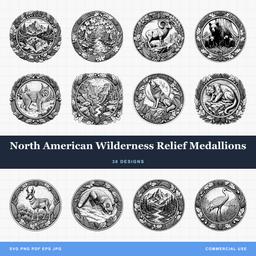 North American Wilderness Relief Medallions30 designs, commercial license included$3.99
Frequently Asked Questions
How many SVG packs a year does it take for a membership to pay for itself?
At PrintCutCarve, sixteen. Every pack is $3.99, so fifteen packs cost $59.85 and the Platinum Club costs $59.99 for a year. Buy sixteen or more packs in a year and the membership is cheaper. Buy ten and you are better off paying for the ten.
Do I keep the files if I cancel a design membership?
At PrintCutCarve, yes. The commercial license stays valid for everything you downloaded while your membership was active, so products you already make from those files are unaffected. What ends is access to download more from the library, and that runs to the end of the billing period you already paid for.
Is the commercial license included on both individual packs and the membership?
Yes, and it is the same license either way. Every $3.99 pack and every member download carries a commercial license covering unlimited physical products, including print-on-demand fulfilment. There is no upgrade tier and no per-unit cap. You cannot resell the digital files themselves.
Is a subscription better if I only craft for my own family?
Usually not. Occasional makers rarely get through sixteen packs in a year, and a handful of individual purchases you own permanently is the cheaper and simpler path. Subscriptions earn their keep on volume and variety, which is a seller's problem more than a hobbyist's.