Every maker who has done a market knows the sting: the table you spent three weekends stocking gets compliments all day and sales all evening, while the booth across the aisle with a tub of five-dollar decals and a rack of name ornaments never stops taking payments. Craft fair shoppers are not gallery visitors. They buy gifts, they buy small, and they buy things with someone's name on them.
The ten items below are the ones that consistently earn their table space for laser, CNC, and Cricut makers. For each one: why it sells, the price range you will typically see on market tags, and the production details that decide whether it is profitable or just popular.
Tip
The pattern behind every item on this list: personalized beats generic, giftable beats decorative, and a booth needs three price tiers, roughly 5 to 10 dollars for impulse buys, 15 to 25 for the middle, and 30 plus for the premium line.
The price ladder at a glance
| Item | Typical market tags | Machine |
|---|---|---|
| Vinyl decals and stickers | $3 to $8 | Cricut, Silhouette |
| Acrylic keychains | $5 to $12 | Laser |
| Personalized ornaments | $8 to $15, sets $25 to $40 | Laser, Cricut |
| Wooden earrings | $10 to $18 | Laser |
| Engraved coasters | $15 to $30 per set | Laser |
| Custom wooden signs | $15 to $45 | Laser, CNC |
| Night lights | $15 to $30 | Laser |
| Engraved cutting boards | $20 to $40 | Laser, CNC |
| Custom t-shirts | $20 to $35 | Cricut, heat press |
| Tiered tray seasonal sets | $25 to $50 per set | Laser, Cricut |
These are typical ranges you will see walking any decent-sized market, not promises. Your material costs and your local crowd set the real number, and the pricing guide shows how to calculate it properly instead of copying a neighbor's tag.
1. Personalized ornaments
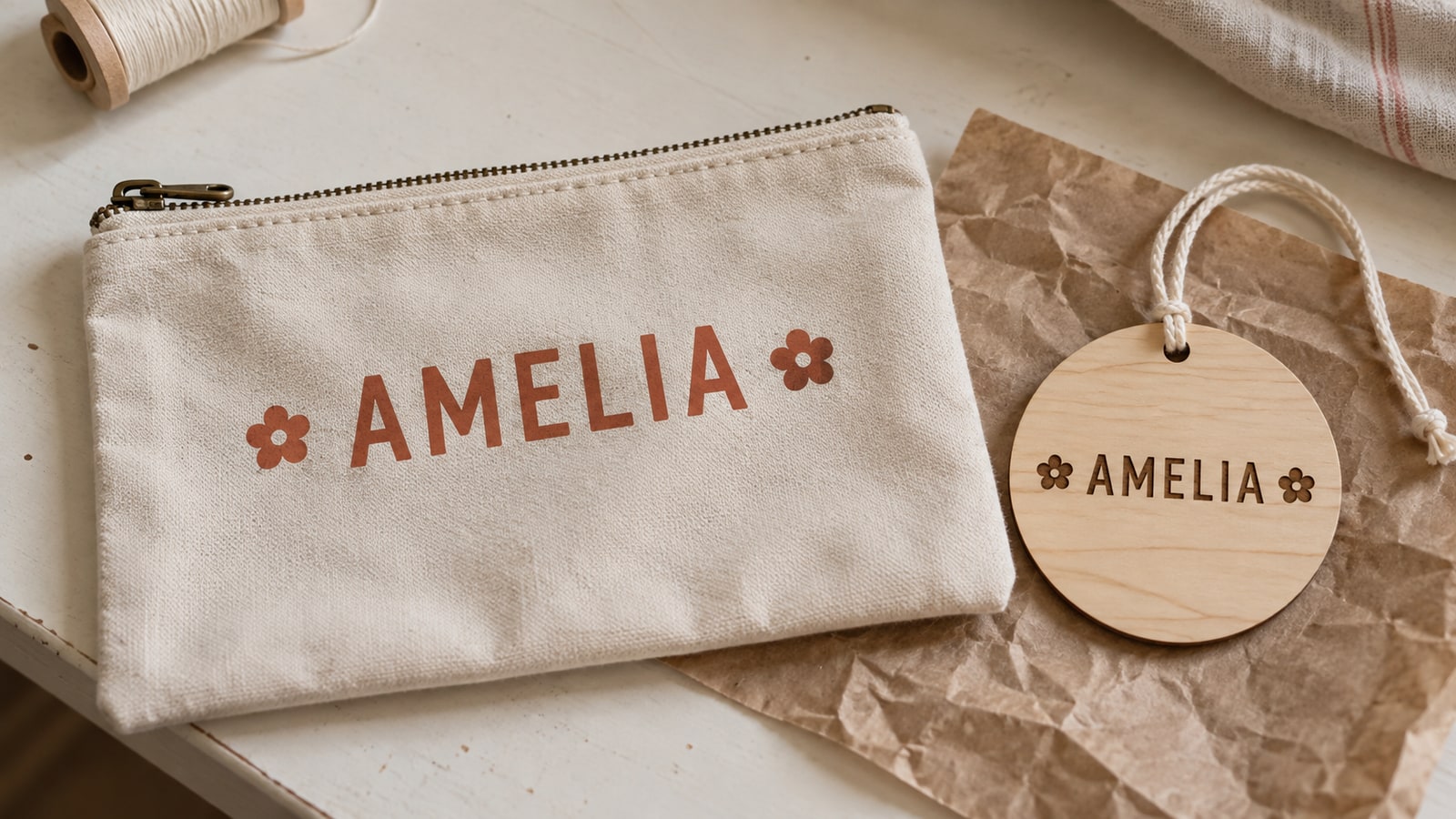
Ornaments are the closest thing craft fairs have to a sure bet. They sell year-round as gift toppers and keepsakes, then absolutely dominate from October through December. Laser-cut wood and engraved acrylic with names, dates, and custom text are the proven formula.
What moves: baby's first Christmas, pet breeds, memorial pieces, and family name with the year. Cut from 1/8 inch basswood or acrylic, they are cheap in materials and fast per unit once batched.
The production play that separates the busy booths: batch-cut blank ornaments at home, then engrave names at the fair. Live personalization draws a crowd, justifies a premium, and turns a browser into a buyer who waits by your table. For build details, our Christmas ornament guide covers materials and assembly.
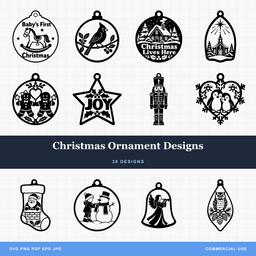 Christmas Ornament Designs38 designs, commercial license included$3.99
2. Custom wooden signs
Signs earn their space twice: once as products and once as advertising, because a well-made sign is visible from across the aisle and pulls shoppers toward everything else on your table. Engraved lettering on stained wood reads as premium in a way vinyl-on-board struggles to match.
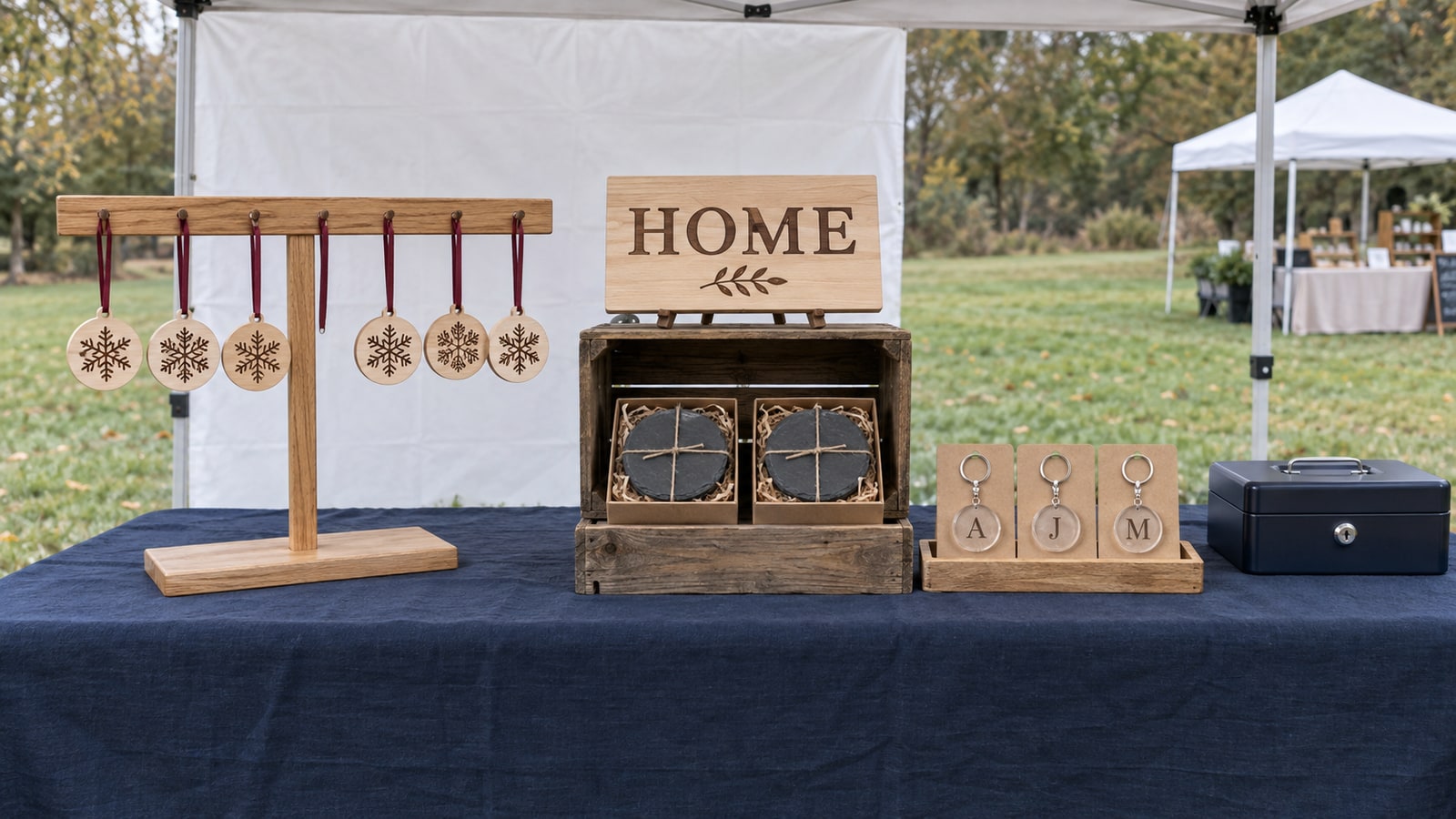
Family name signs, address signs, kitchen signs, pet signs, and home sweet home variants are the reliable sellers. Display them upright at varying heights; a sign lying flat on a table is invisible from six feet away, and six feet away is where buying decisions start.
From the file side, sign designs live or die on their lettering. Chunky, connected letterforms engrave cleanly and read at distance, while delicate scripts with hairline joins disappear into the grain. Pick designs whose thinnest stroke is still bold at the size you cut.
3. Engraved cutting boards
Cutting boards are the craft fair gift-buyer's favorite. They get used, the personalization makes them feel chosen, and they look far more expensive than they cost to make. Bamboo boards engrave with excellent contrast, and wedding dates, family names, and recipe boards in a relative's handwriting all sell steadily, with holiday markets the peak.
Margins are made at sourcing, not at the laser. Restaurant supply stores sell bamboo boards in bulk for a fraction of craft store prices, and that difference is most of your profit. Finish with food-safe oil and say so on the tag; buyers ask.
Sayings-based designs earn their keep here because one design pack covers an entire product line: kitchen humor for one crowd, grandma's kitchen for another, all engraved on the same blank.
4. Vinyl decals and stickers
Decals are your impulse tier, the items that catch the five-dollar bill from shoppers who were not planning to buy. Cricut-cut vinyl for cars, water bottles, and laptops is quick to produce, light to transport, and fills a booth's low price rung.
Pet breed silhouettes, outdoor and nature themes, funny sayings, and monograms are the perennial movers. Display samples applied to real surfaces, a thrifted laptop lid or a water bottle, so shoppers see the finished look instead of imagining it.
One file-craft warning: at decal size, design detail is the enemy. A silhouette that weeds in three minutes is a business; one with forty tiny interior cuts is a hobby that follows you to the booth. Choose single-piece silhouette designs with bold shapes, and mind the arithmetic in our pricing guide, because underpriced decals quietly lose money at any volume.
5. Wooden earrings
Laser-cut earrings from thin birch plywood pack more sellable stock into less table space than anything else here: a hundred pairs fit in a shoebox, and a small display stand shows thirty designs in one square foot of table. Few items match their margin per booth-inch.
Geometric shapes, leaf and floral designs, state outlines, and seasonal themes sell best. Cut in batches with a jig, then paint or stain for variety so one afternoon of cutting yields a full display of apparently different products.
Files matter more here than almost anywhere: at earring scale, interior details closer than a couple of millimeters char and close up. Look for designs drawn with bold, open shapes that survive being cut at two inches.
6. Engraved coasters
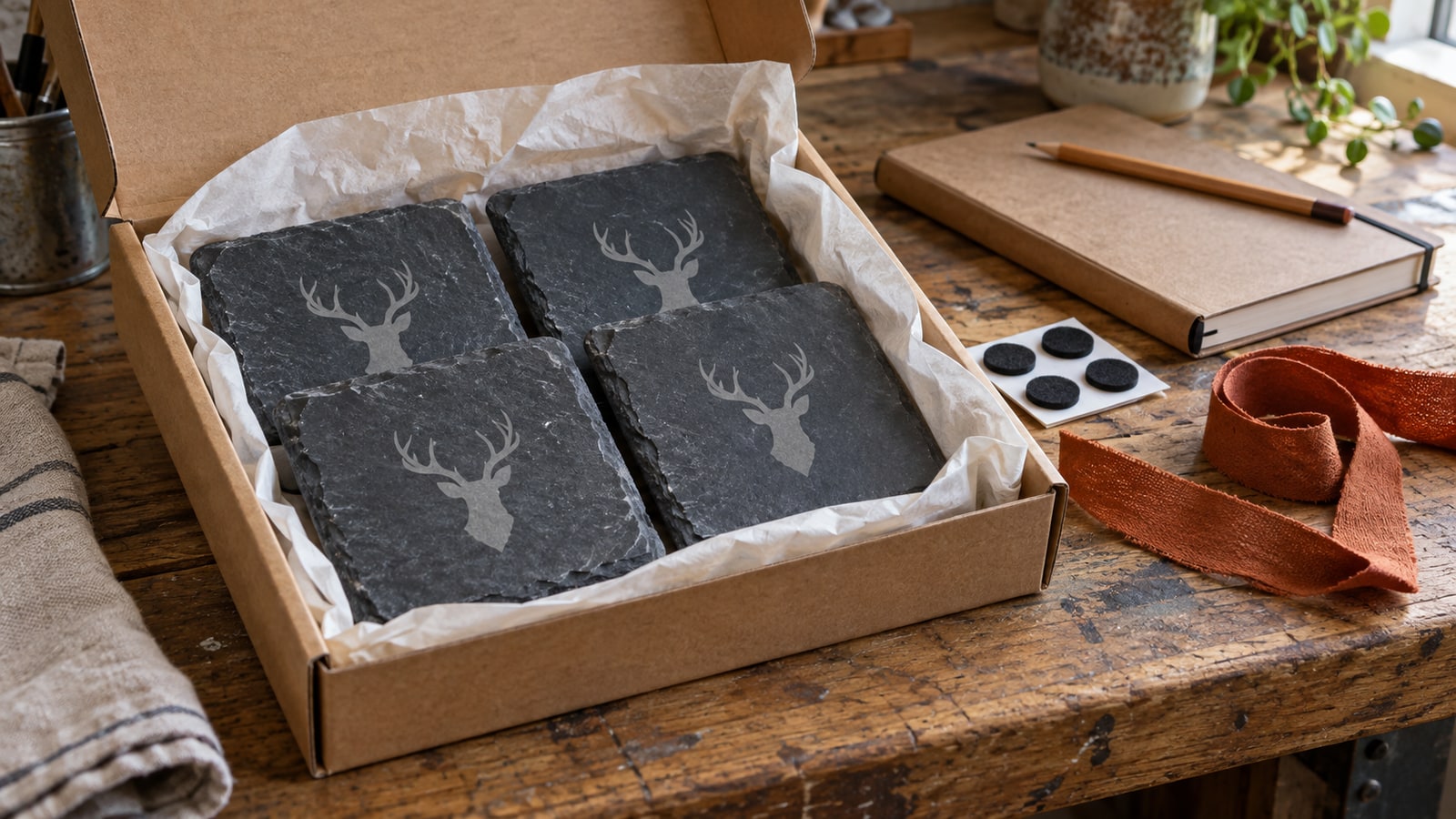
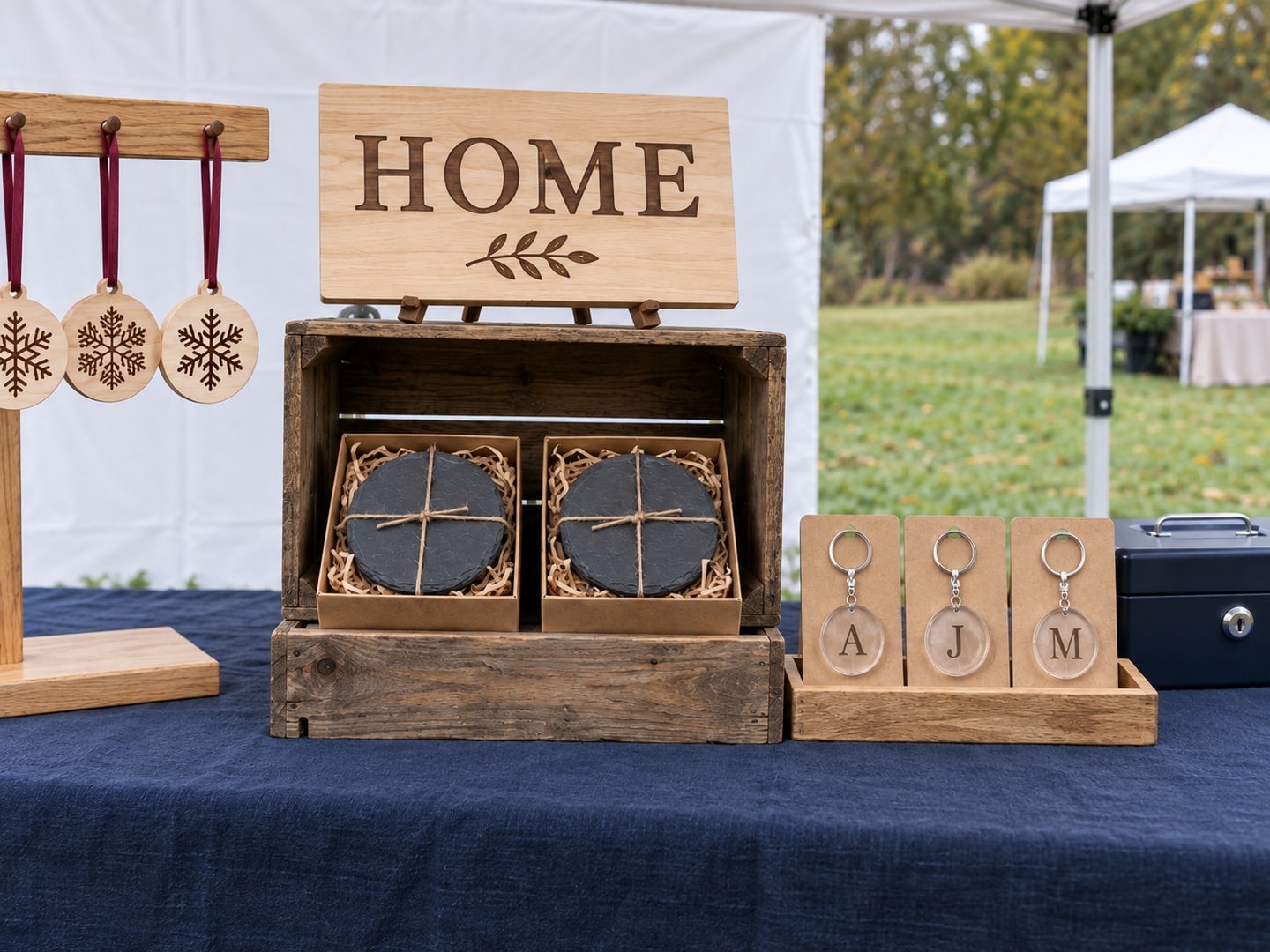
Coaster sets are the workhorse of the 15-to-30 tier, selling as gifts and as self-purchases. Slate with white-engraved wildlife or monograms looks striking on a dark tablecloth, and bamboo or cork-backed wood works for a lighter look.
Animal scenes, monograms, funny sayings, and nature designs all move. Sell in sets of four; sets gift better and lift the average sale. Engraving-style designs with fine hatching and texture shine on slate specifically, because engraving marks a surface rather than cutting through it, so detail that would fail as a cut survives beautifully.
For the technique side, our slate engraving guide covers prep, contrast, and sealing.
7. Acrylic keychains
Keychains share the impulse tier with decals and add durability and shine. Clear or colored 1/8 inch cast acrylic, cut and engraved, lands in the 5 to 12 dollar range where nobody negotiates.
Pet shapes, initials, occupations, and sports themes sell best, and occupation designs, teacher, nurse, firefighter, quietly outperform because they are bought as small thank-you gifts in multiples. Like ornaments, keychains reward live personalization: a name engraved on the spot turns a two-dollar blank into a ten-dollar memory.
8. Custom t-shirts
Heat transfer vinyl shirts pull double duty as product and booth decoration, because a rack of shirts is visible from farther away than anything else you sell. Local pride designs, pet breeds, occupations, funny sayings, and seasonal themes are the dependable movers.
Stock proven designs in common sizes and offer custom text at a premium. Hang shirts on a rack at eye level; folded shirts might as well be in the car. Single-color, bold-stroke designs weed fast and press flawlessly, which is exactly what you want the night before a market. Our HTV shirt guide covers the workflow from file to press.
9. Night lights
Engraved acrylic panels on LED bases glow like small magic tricks, and at an indoor or evening market a lit display stops foot traffic on its own. Kids' names with themes, pet silhouettes, couples' names, and holiday scenes are the sellers.
The trick is edge-lit engraving: the LED light catches every engraved line while untouched acrylic stays clear, so line-art designs with clean, deliberate strokes produce the sharpest glow. Keep your display corner slightly dim so the lights do the selling, and bring batteries.
10. Tiered tray seasonal sets
Tiered tray decor is bought as a look, not as pieces, and that is why bundled sets of six to eight small themed items command more than the same items sold singly. Spring, summer, fall, and winter sets plus Halloween, Christmas, and Valentine's versions give you a rotating product line that refreshes itself four times a year.
Display a real tiered tray, fully styled, exactly as it would sit on a buyer's kitchen counter. Shoppers buy the arrangement they can already picture at home. Fall sets built around leaves, pumpkins, and harvest sayings are the classic entry point, and the same files scale from tray minis to door-size decor.
Match the item to the season
Craft fair demand runs on a calendar, and stocking against it matters as much as choosing the right items.
Fourth quarter is the main event: ornaments, cutting boards, and gift sets carry October through December, and most makers do the majority of their annual sales in those weeks. Spring markets favor garden themes, Easter pieces, and Mother's Day gifts, with wedding season starting to pull cake toppers and signs. Summer fairs lean into outdoor themes, camping, lake and beach designs, and lighter impulse buys, since vacation crowds browse more and gift-shop less.
Two planning rules follow. First, cut seasonal stock a full season ahead, because September evenings are for building Christmas inventory, not designing it. Second, favor designs that cross seasons: a family name sign, a pet silhouette, and a monogram sell in any month, so they form the stable base under your seasonal rotation.
What did not make the list
A few popular booth items miss the cut, and the reasons are instructive.
Generic unpersonalized decor struggles because shoppers can get flat decor cheaper at a big-box store; your machine's advantage is customization, so sell it. Heavily licensed work, sports team logos and cartoon characters, sells fast right up until the shop gets a takedown notice, which is why the sports items that last use generic designs. And complex multi-layer showpieces, the twelve-layer mandala lamp that took a weekend, draw compliments rather than purchases: their labor cost pushes the price past what a fair crowd pays. Save them for the booth display, where they pull people toward the items that actually sell.
Booth tactics that move the needle
- Cover the three price tiers. A booth of only $40 signs starves between big sales; a booth of only $5 decals works hard for little. The ladder catches everyone.
- Personalize live if you can. A small machine at the booth engraving names while people watch is theater, premium pricing, and a crowd magnet in one.
- Take cards. A basic card reader captures every shopper who stopped carrying cash years ago, which is most of them.
- Hand out cards with your Etsy URL. The shopper who does not buy today may order three personalized boards in November. Make it easy; our Etsy guide covers turning fair traffic into an online customer base.
- Track what sells. A tally sheet per event tells you which items earn their table space. Feelings lie about this; the sheet does not.
- Batch production before the season. Markets cluster in the fourth quarter, and the makers who thrive cut inventory in September. The batch production guide shows how to build stock without losing your evenings.
Stock your booth
Every pack below is $3.99 with a commercial license included, meaning unlimited physical products with no royalties and no unit caps. Files ship as SVG, PNG, JPG, PDF, and EPS, so the same purchase feeds your Cricut, your laser, and your CNC.
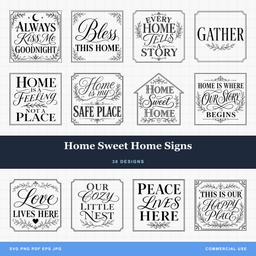 Home Sweet Home Signs30 designs, commercial license included$3.99
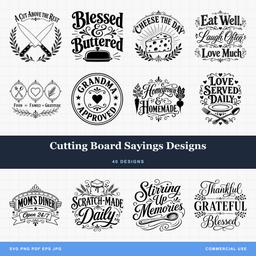 Cutting Board Sayings Designs40 designs, commercial license included$3.99
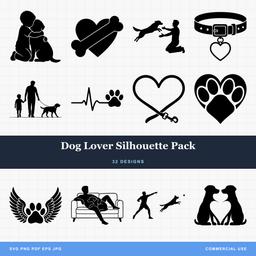 Dog Lover Silhouette Pack32 designs, commercial license included$3.99
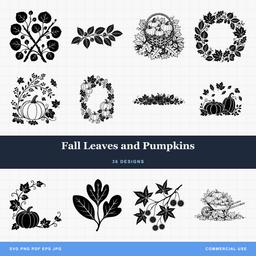 Fall Leaves and Pumpkins36 designs, commercial license included$3.99
Browse the full design library to fill the gaps in your ladder, and if you are stocking several product lines at once, the Platinum Club at $59.99 per year covers everything while you find out what your market buys.
Designs for this project
Christmas Ornament Designs38 designs, commercial license included$3.99Home Sweet Home Signs30 designs, commercial license included$3.99Cutting Board Sayings Designs40 designs, commercial license included$3.99Dog Lover Silhouette Pack32 designs, commercial license included$3.99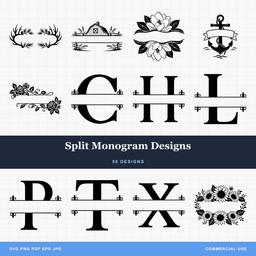 Split Monogram Designs50 designs, commercial license included$3.99Fall Leaves and Pumpkins36 designs, commercial license included$3.99
Frequently Asked Questions
What sells best at craft fairs?
Personalized, giftable items with a clear recipient in mind: ornaments with names and dates, family name signs, engraved cutting boards, and small impulse buys like decals and keychains. Items a shopper can picture giving to a specific person outsell generic decor, and anything you can personalize on the spot sells at a premium.
What price points should a craft fair booth cover?
Cover three tiers: an impulse tier around 5 to 10 dollars (decals, keychains), a middle tier around 15 to 25 dollars (ornaments, coasters, small signs), and a premium tier at 30 dollars and up (cutting boards, large signs, tiered tray sets). Every budget that walks past should have something it can say yes to.
Can I sell items made from purchased SVG designs at craft fairs?
Yes, when the design includes a commercial license. Every PrintCutCarve design does, with unlimited physical products allowed. The file itself can never be resold, but the finished items are yours to sell however you like.